
Here’s the sentence that reframes everything you think you know about this story. Baylen Dupree didn’t build a following by being relatable. She built it by being uncontrollable. Involuntary motor tics. Unplanned vocal sounds. A body that does what it wants when it wants, with cameras rolling.
And from that completely unpredictable starting point, she stacked somewhere between $1 million and $5 million in verified estimated net worth by age 23.
Unpack that. A young woman from Ranson, West Virginia — not New York, not LA, not anywhere on the influencer map — turned a neurological condition most people associate with swearing into a TLC reality show, a nationally recognized platform, and a legitimate multi-stream income. Prior to the age at which she may rent a car for free.
Let’s get into the actual numbers and the actual story.
Quick Bio
| Detail | Info |
| Full Name | Baylen Dupree (now Baylen Dupree Dooley post-engagement) |
| Born | July 30, 2002, Ranson, West Virginia |
| Age (2026) | 23 |
| Diagnosis | Tourette Syndrome — first tics noticed around age 6–7, returned severely at 15 |
| Parents | Allen Dupree (government worker); Julie Dupree (stay-at-home mom) |
| Siblings | Burke, Sammi, Sven, Vick, and Bechnir |
| Fiancé | Colin Dooley — U.S. Air Force serviceman; engaged February 2025 |
| Engagement Ring | Approximately $22,000–$22,900 oval diamond, 7.78 carats |
| Residence | Arlington, Washington |
| TikTok | @baylen.dupree — 11+ million followers |
| Approx. 2.8–3 million followers | |
| TikTok Start | 2020 (pandemic era) |
| TV Show | Baylen Out Loud (TLC), premiered January 13, 2025 |
| Notable Appearance | Dr. Phil (pre-TLC launch) |
| Advocacy Brand | “Beautifully Complex” |
| Estimated Net Worth | $1 million to $5 million (most credible estimate range, 2026) |
| Monthly TikTok Income | Estimated $10,000–$15,000 |
| Core Assets | Arlington apartment; liquid income from content + TV |
The Number Problem Nobody Admits Up Front
Let’s be honest right out the gate. Baylen Dupree’s net worth is estimated. Not confirmed. Not audited. Not publicly disclosed. Every source — and there are a lot of them — is working from publicly observable indicators: follower counts, engagement rates, TLC compensation industry averages, Cameo pricing, brand deal speculation. Then they extrapolate.
The range is wide for a reason. One credible analysis puts her closer to $1.5 million as a core figure. Others stretch toward $5 million on the optimistic end. R. Couri Hay cites $500,000 to $750,000, suggesting she hasn’t crossed the seven-figure threshold yet. An algorithmic platform called Hafi calculated annual earnings between $251,000 and $343,000 based purely on social metrics — which would put total accumulated wealth at the lower end of the range if you factor in expenses and taxes.
The honest answer is somewhere between $1 million and $3 million is probably where reality lives. Maybe higher with a strong Season 2 TLC deal. Maybe lower if private expenses chip into the visible income. I’m not going to pretend any single number is gospel when even the most careful analysis is essentially informed guesswork.
See also “Jack Doherty Net Worth: The Kid Who Turned Chaos Into Cash (And Almost Lost It All)“
A Little Town in West Virginia and a Disorder Nobody Could Explain for Years
Baylen grew up in Ranson, West Virginia. Not exactly the talent pipeline that typically produces social media millionaires. Six kids in one household — Burke, Sammi, Sven, Vick, Bechnir, and Baylen. Her dad Allen worked a government job. Her mom Julie held everything together at home.
Her parents first noticed something unusual when she was about six or seven years old. A strange neck movement that nobody could quite categorize. It faded. And then around age fifteen, it came back — harder, louder, more physical. Motor tics. Vocal tics. Involuntary movements that made daily functioning genuinely difficult and made certain public situations feel impossible.
She eventually had to step away from college. That detail matters. The disorder didn’t just affect her comfortably in the background while she carried on with a normal life. It disrupted the conventional path. It forced an alternative route.
She found it on TikTok, which is either a beautiful story about resilience or a sobering reminder of how few options exist when the traditional ladder gets kicked out from under you. Probably both.
The Bullying That Launched the Platform
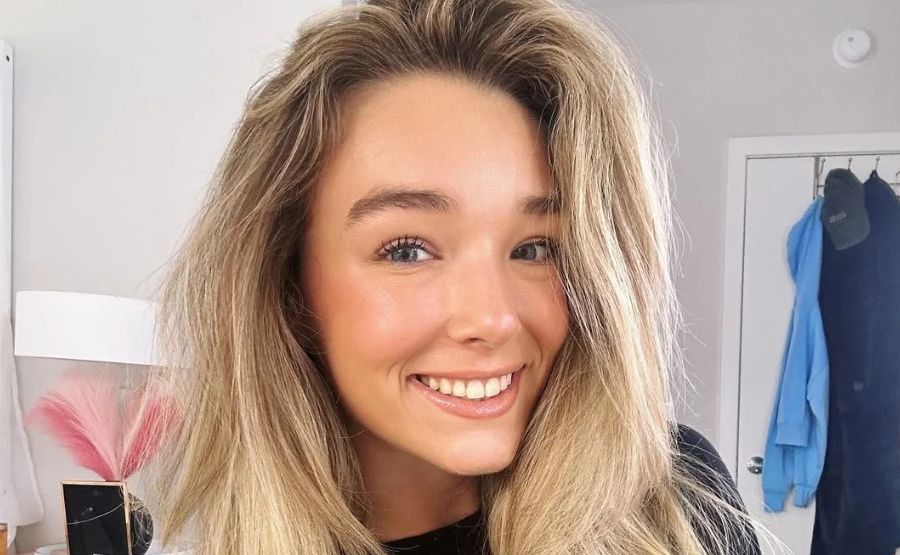
Here’s the part people rush past because it’s uncomfortable. Baylen didn’t start posting because she wanted viral fame. She started posting because other people were already sharing videos of her without her permission. Clips circulating. People talking. Content being made about her tics that she had no say over.
She told Good Morning America exactly what happened. Videos were being passed around. She was being discussed without being consulted. And she made a decision: if people were going to talk about her condition and her life, she was going to be the one doing the talking.
That’s not a content strategy. That’s self-preservation dressed up as a content strategy. The difference matters because it explains why her audience connection is so different from most influencers. She wasn’t performing authentically. She was wresting control of her own narrative.
She told Dr. Phil directly: she started showing herself on TikTok with Tourette’s because other people were making her feel ashamed of who she was. The people who accused her of faking — and there were plenty — only strengthened the case she was making. Nobody, she pointed out, would choose to live this way for views.
Eleven Million People Started Paying Attention
The pandemic gave TikTok its biggest growth moment. And inside that moment, an unfiltered young woman from West Virginia posting herself getting her nails done, cooking, putting on makeup, doing ordinary things while her body simultaneously did extraordinary unexpected things — that content traveled.
Not because it was shocking. Because it was honest in a way most content isn’t. The algorithm usually rewards perfection. Baylen’s content was structurally incapable of perfection, and that turned out to be exactly what millions of people needed to see.
By the time TLC came calling, she had cleared 10 million TikTok followers and had built one of the most genuinely engaged audiences in her content category. Not passive scrollers. Active followers who treated her comment sections like a community — people with Tourette’s who finally felt represented, parents of kids with the condition, people who’d never heard of it and came away changed.
TLC President Howard Lee said it plainly when announcing the show: her fearless honesty about Tourette Syndrome wasn’t just breaking stereotypes — it was building bridges. That’s the pitch that got greenlit. Real visibility for a real condition.
Dr. Phil, TLC, and the TV Money That Changed Her Financial Trajectory
The Dr. Phil appearance is the hinge point. It happened before Baylen Out Loud, during a period when she was already massive on TikTok but hadn’t crossed into traditional broadcast media yet. She sat across from the veteran host and explained her condition to a mainstream daytime audience. And, in a moment that’s now famous in her community, she blurted out — mid-interview, involuntarily — that Dr. Phil was bald. He handled it with grace. She handled it with humor. The clip spread everywhere.
TLC noticed. Baylen Out Loud premiered January 13, 2025, as a full reality series covering her daily life, her family dynamics, her relationship with Colin, and the ongoing reality of navigating Tourette Syndrome in every environment. The family element — five chaotic, loving siblings, two devoted parents — gave the show its warmth. The condition gave it its stakes.
Now let’s talk about what TV money actually means for her net worth. TLC compensation structures are worth understanding. Early-season cast members on entry-level TLC shows earn as little as $1,000 to $2,000 per episode. Stars with established TLC franchises can reach $40,000 per episode. As the sole primary subject of her own show — not a supporting cast member — Baylen sits closer to the upper end of that range. With Season 1 running eight-plus episodes, conservatively that’s $160,000 to $320,000 from television alone in year one. Season 2 was already in production as of 2026.
TikTok Income Breakdown — What She Actually Earns
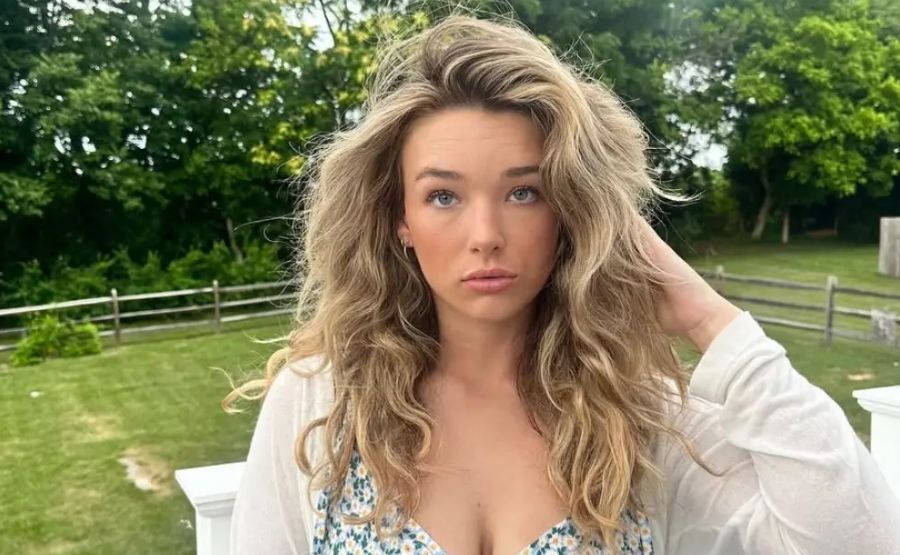
The platform money is more straightforward than people think. Here’s how her TikTok income works.
TikTok’s Creator Program (formerly the Creator Fund) pays based on views, engagement, and region. With 11 million followers and the engagement rates her content generates — not passive consumption but active community interaction — her monthly TikTok income is estimated between $10,000 and $15,000. That’s $120,000 to $180,000 annually from the platform’s native monetization before a single brand deal.
Brand deals on top of that depend on the deal structure. With her follower base and demographic — the disability advocacy space is increasingly valuable to brands in wellness, healthcare, beauty, and lifestyle — individual sponsored posts can range from several thousand dollars to significantly more per integration. Selective use means each deal hits harder without diluting the trust her audience extends her.
Cameo is another revenue line. She charges per personalized video message. She’s been public about one quirk: people keep requesting that she tick on command in Cameos, which she has explained directly doesn’t work that way. Tourette’s is not a performance. She still does the Cameos, still personalizes them, and earns recurring income from them — she just sets the boundary about what they’re going to look like.
Merchandise adds another layer. Branded products tied to her Beautifully Complex advocacy identity. YouTube monetization. Public appearance fees as her television profile grows. Each stream is individually modest. Together they create something that compounds.
The Fiancé Factor and What It Actually Means Financially
Colin Dooley entered the picture in November 2022. They went public with the relationship gradually, co-appeared in her TLC content, and in February 2025 he proposed — the ring a roughly 7.78-carat oval diamond estimated at $22,000 to $22,900. The engagement was documented for the show and became one of Season 1’s major storylines.
Here’s the financial angle most profiles miss. Colin is in the U.S. Air Force. That’s a stable government income, housing allowance, and benefits structure that doesn’t fluctuate with algorithm changes or brand deal renewals. They currently share an apartment in Arlington, Washington. From a financial planning standpoint, that shared household foundation gives Baylen more flexibility to take creative risks with her income streams rather than treating every deal as a necessity.
It’s worth noting this isn’t the dominant factor in her wealth. Her money is her money. But shared living expenses and a partner with a stable independent income stream is a genuinely meaningful support structure for a 23-year-old creator in an industry notorious for volatility.
The Faking Controversy — And Why It Actually Matters For This Discussion
I’m going to spend a paragraph on this because it’s real and it affects her platform’s sustainability. There is an ongoing online current of skepticism — people who question whether her tics are authentic. The skepticism gets louder around specific moments, like her Dr. Phil appearance where tics appeared somewhat different from her TikTok content.
The Dealing With Disorder analysis is worth understanding here. Tourette Syndrome is genuinely variable. Tics change based on stress, environment, medication, and a dozen other factors. Suppression is real but atypical for severe cases. The most extreme tics tend to get amplified in certain environments and reduced in others. The accusation of “faking” runs into the same wall that most Tourette skepticism hits: you cannot tell from the outside, the condition is inherently unpredictable, and the assumption that all Tourette presentations should look identical across all contexts is simply wrong.
From a financial stability standpoint, this matters because her income depends on community trust. If the skepticism became mainstream rather than fringe, it could damage brand partnerships and platform engagement. So far, her transparent handling of the accusations — addressing them directly, explaining the condition’s variability, letting the TLC show provide extended context that short TikToks can’t — has kept that trust intact. Season 2 filming suggests the platform isn’t wobbling.
Real Property, Real Assets — What She Actually Owns
Her tangible asset base at 23 is genuinely modest compared to the headline net worth figures. The Arlington apartment she shares with Colin is her primary property. She doesn’t appear to own it — she rents — which means it’s not a net worth asset in the traditional sense, but it is a quality-of-life marker.
Liquid assets would be the primary wealth storage: income saved from the platform, television fees, and brand deals, potentially in investment accounts or savings. At 23, with income streams that started materially accelerating only in the last two to three years, the accumulated savings are real but not yet at the compound-growth stage that generates passive wealth.
The honest trajectory here is that she’s building the foundation, not sitting on a mountain. The $1 to $5 million range represents early accumulation, not mature wealth. If Baylen Out Loud runs multiple seasons, if brand partnerships scale with her public profile, and if she diversifies into owned ventures — a book, a speaking circuit, a podcast — the compounding gets serious fast.
The Beautifully Complex Brand and Why It’s the Long Game
Her advocacy branding is called Beautifully Complex. It’s a phrase she used in an interview when describing how all of us are more alike than different — and that the best response to Tourette Syndrome isn’t shame but grace. “Just let them tic,” she said, “because we’re all beautifully complex.”
That phrase became a brand identity. And here’s why it’s a smart long-term play. Influencer income tied to a platform algorithm can evaporate when the algorithm changes or the audience moves on. Advocacy-based brand identity has a stickiness that pure entertainment content doesn’t. The Tourette community she’s built is genuinely loyal. Parents of kids with the condition write to her. People who’ve been dismissed by doctors recognize their experience in her content. That’s not a follower count. That’s a constituency.
Monetizing a constituency responsibly — rather than burning through it — is the difference between a five-year career and a twenty-year platform.
Final Thoughts
Here’s where I land after spending real time in this story. Baylen Dupree’s net worth number is the least interesting thing about her financial story. What’s actually interesting is the mechanism.
She built income from a condition the internet initially mocked, on a platform built for perfection, from a state nobody was watching for the next wave of talent. She was bullied into her first post, accused of faking her second wave of posts, had to navigate a Dr. Phil interview where her tics called out his baldness live on air, and came out of that with a national television show and a brand identity that’s earned genuine institutional recognition.
The $1 to $5 million figure is real. It’s also mostly just the beginning of the sentence. At 23, with Season 2 filming, with a following that’s built on actual loyalty rather than viral accident, and with a brand identity that has natural expansion into books, speaking, corporate wellness partnerships, and continued television — the net worth number five years from now is the one that’s going to be genuinely interesting.
She turned “I want to be in control of my diagnosis, my life, my condition” into a multi-stream income before she could have legally rented a car when she started. That’s not a viral moment. That’s a business.
FAQs
1. How much will Baylen Dupree be worth in 2026?
Most credible estimates place it between $1 million and $5 million, with the most careful analyses suggesting the realistic core figure is approximately $1 million to $2 million. The range is wide because much of her income comes from private contracts that aren’t publicly disclosed. Some sources cite as low as $500,000 to $750,000 if TLC income isn’t yet fully accumulated.
2. How does Baylen Dupree make money?
She earns through TikTok’s Creator Program ($10,000–$15,000 estimated monthly), TLC reality television episode fees for Baylen Out Loud, Cameo personalized videos, brand partnerships and sponsored content, merchandise, and YouTube ad revenue. Each stream is individually modest; together they compound into the million-dollar range.
3. How much does Baylen Dupree earn from TikTok?
Based on her 11+ million followers and excellent interaction rates, her monthly income from TikTok’s Creator Program alone is estimated to be between $10,000 and $15,000. Brand deals and sponsored integrations sit on top of that figure.
4. How much does Baylen Dupree earn from Baylen Out Loud on TLC?
Her exact per-episode fee isn’t public. TLC pay for reality stars ranges from $1,000 to $40,000 per episode depending on show status and contract tier. As the central figure of her own named show, she likely earns toward the higher end of that range — potentially $30,000 to $40,000 per episode, which across an 8-episode season represents $240,000 to $320,000.
5. When did Baylen Dupree start on TikTok?
She began posting in 2020 during the pandemic, sharing unfiltered content about her daily life with Tourette Syndrome. Her following grew organically through genuine community connection rather than manufactured viral moments.
6. What is Baylen Dupree’s Tourette Syndrome like?
She first noticed tics around age 6 or 7, starting with minor motor movements that eventually disappeared and then returned more severely around age 15. Her condition involves both motor tics (involuntary movements) and vocal tics (involuntary sounds). Symptoms are unpredictable and vary by environment and stress level, which is medically typical for Tourette’s.
7. Has Baylen Dupree been accused of faking Tourette Syndrome?
Yes, repeatedly. Online skepticism has been an ongoing thread since her viral rise. She has addressed it directly multiple times, explaining that Tourette’s presentation varies significantly across environments, that suppression is not typical for severe cases, and that her documented history with the condition since childhood is consistent with the diagnosis. TLC’s extended format has provided more comprehensive context than short-form clips can offer.
8. Who is Baylen Dupree’s fiancé?
Colin Dooley, a member of the U.S. Air Force. They began dating in November 2022, went public over time, and Colin proposed in February 2025. The engagement ring is estimated at approximately $22,000 to $22,900. They live together in Arlington, Washington.
9. Where does Baylen Dupree live?
She currently lives in Arlington, Washington, in a two-bedroom apartment she shares with her fiancé Colin Dooley.
10. What is the Beautifully Complex brand?
Her advocacy brand identity, named after a phrase she used to describe how all people — with or without neurological differences — are fundamentally more similar than different. It underpins her Tourette Syndrome awareness work, community building, and is likely to expand into merchandise, speaking, and additional branded ventures.
11. What did Baylen Dupree say on Dr. Phil?
During her pre-TLC appearance on Dr. Phil, she explained that she started posting on TikTok because people were making her feel ashamed of her condition and she wanted to control her own narrative. In a much-shared moment, she involuntarily called out that Dr. Phil was bald mid-interview — a motor-vocal tic — and both handled it with humor.
12. What is Baylen Out Loud about?
The TLC reality series follows Baylen’s everyday life, including her family dynamics (she has five siblings), her relationship and engagement to Colin Dooley, and the ongoing reality of living with Tourette Syndrome. It premiered January 13, 2025, with Season 2 in production as of 2026.
13. What does Baylen Dupree charge on Cameo?
Her specific Cameo pricing isn’t publicly listed at a fixed rate, but she earns recurring income from personalized video requests. She’s publicly asked fans to stop requesting that she tick on command in videos, explaining that Tourette’s doesn’t work on a request basis — a boundary she set clearly while still offering to do personalized, meaningful messages.
14. What is Baylen Dupree’s Instagram following?
Approximately 2.8 to 3 million followers across Instagram, alongside her primary TikTok presence of 11+ million followers.
15. What does Baylen Dupree want to do next in her career?
In an Interview Magazine conversation, she said she’s always wanted to be a model since she was six years old, but doesn’t expect to enter that space. Her stated next goal is public speaking — using her platform and story for live advocacy work beyond digital content.
Keep discovering, connecting, and thriving with The Nexus Magazine every day.