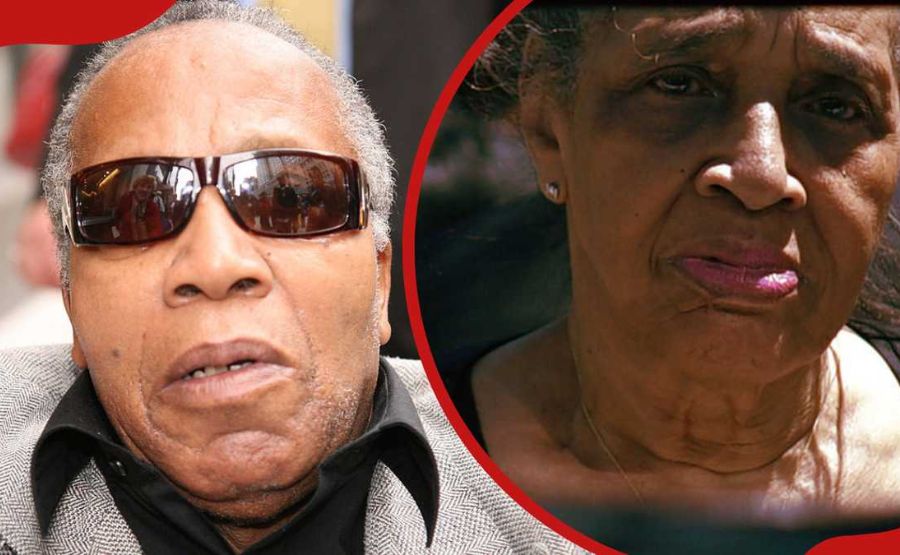
Julie Farrait: The Woman Harlem’s Kingpin Couldn’t Live Without — And Couldn’t Keep Out of Prison

Quick Bio
| Detail | Info |
| Full Name | Julianna Farrait Rodríguez |
| Known As | Julie Farrait / Julie Lucas |
| Born | Around 1941, San Juan, Puerto Rico |
| Nationality | Puerto Rican-American |
| Nickname | “Black Bonnie” (as in Bonnie & Clyde) |
| Spouse | Frank Lucas (married 1967, until his death 2019) |
| Children | Francine Lucas-Sinclair, Frank Lucas Jr., Ray Lucas, and others |
| Notable Daughter | Francine Lucas-Sinclair — founder of Yellow Brick Roads nonprofit |
| Legal Trouble 1 | 1975 raid — threw $584,000 in suitcases out a window during DEA bust |
| Legal Trouble 2 | Las Vegas arrest (1980s) — caught during a drug deal at Stardust Hotel |
| Legal Trouble 3 | May 2010 — arrested in Puerto Rico trying to sell 2kg cocaine to a DEA informant |
| Sentence (2012) | Five years federal prison for narcotics conspiracy |
| Released | Around 2017 |
| Film Portrayal | Character “Eva” in American Gangster (2007), played by Lymari Nadal |
| Last Public Appearance | Frank Lucas’s funeral, Newark NJ, June 11, 2019 |
| Current Status | Believed alive but completely private; whereabouts unclear |
She Was Not Just “The Wife”
Let’s get something straight first. Every article about Julie Farrait starts and ends with Frank Lucas. His name. His drugs. His empire. His movie.
And that drives me absolutely crazy.
Because this woman — this Puerto Rican girl who got on a plane from San Juan and walked right into one of the most dangerous criminal worlds America has ever seen — she has her OWN story. It’s messy. It’s complicated. And honestly? It’s more interesting than Frank’s.
She was a homecoming queen from San Juan who became a partner in a heroin empire. Take a moment to consider that. From tiara to federal conviction. That’s not background noise. That’s an entire life.
See also “Gabe Solis: The Man Behind the Drama, the Cameras, and the Quiet Death Nobody Saw Coming“
The Flight That Changed Everything
Here’s where it starts. A plane. Puerto Rico to New York. Sometime in the 1960s.
“Cute girl, too,” Frank noted in his memoir.”Every time I turned around to check her out, she was smiling at me. I didn’t need any more of a hint.”
Very smooth, Frank. Very smooth.
“The first time I met Frank, I was completely taken back by his confidence and coolness,” Julie told the Village Voice in 2007. “He was a very self-assured man, which I found very attractive. And I still do.”
Dangerous combination right there. A charming man with money and confidence, a beautiful woman who found danger attractive. She once told a newspaper she was always attracted to danger. She also said she missed taking trips and having diamonds and a Mercedes Benz. “Those who say that money is not important are lying,” she was quoted as saying.
I mean, at least she was honest.
They married in 1967. And the life that followed was nothing short of cinematic. Problem is, real life doesn’t let you skip to the credits.
What “Luxury” Actually Looked Like
Frank Lucas claimed to be pulling in $1 million a day at the peak of his “Blue Magic” heroin operation. He had over $50 million in Cayman Islands banks and hundreds of millions in stockpiled drugs.In addition, he possessed a cattle ranch, office buildings, and apartments across the US and Puerto Rico.
And Julie was right there wearing all of it. Literally.
His daughter Francine had a $10,000 FAO Schwarz train set, a Fendi fur coat, excess toys, and dozens of cuddly toys where her father hid his money. A child’s stuffed animals used to hide drug money. This is the reality behind the glamour, folks. Not the movie version.
But let’s talk about the coat. This is the moment everyone remembers.
The $165,000 Outfit That Caught the Cops’ Attention
She would buy her husband a gorgeous, pricey new coat for the 1971 bout between Muhammad Ali and Joe Frazier at Madison Square Garden. Julie purchased a $40,000 hat and a $125,000 chinchilla coat from a “Jewish shop” in Manhattan.
Let me pause here. $165,000. In 1971. That’s well over a million dollars in today’s money. On a coat and hat. For a boxing match.
Frank Lucas wore it to the fight — but attracted the wrong kind of attention. There were several detectives in the audience that night that noticed Frank Lucas. He had better seats than both Vice President Spiro Agnew and Frank Sinatra, in addition to wearing a nice coat.
The man had better seats than the Vice President of the United States. Wearing a six-figure fur coat. At a boxing match.
You genuinely cannot make this up.
“Law enforcement knew of him,” explained prosecutor Richie Roberts. The coat didn’t cause his fall, but it painted a target on him so big that even the blindest detective couldn’t miss it. This was Julie’s gift. A love gift. That became the beginning of the end.
She Wasn’t Passive. She Was IN It.
Here’s where I want to push back against every “loyal wife” narrative you’ve ever read.
Julie Farrait was not standing in the background looking pretty. She helped manage money, assisted in logistics, and acted as a reliable partner in a world where trust was rare. Frank himself said she was the only person he truly trusted. That’s a significant operational role in a criminal empire.
She moved money, helped coordinate logistics, and stood shoulder-to-shoulder with Frank as he built one of the most infamous drug empires of the 20th century.
This wasn’t passive loyalty. This was active participation. She knew what the money was. She knew where it came from. And she kept going anyway.
The Raid. The Suitcases. The Screaming.
January 28, 1975. The DEA and NYPD hit the Lucas home in Teaneck, New Jersey.
Julianna allegedly yelled in her distress and flung many suitcases containing her husband’s more than half a million dollars out of the window.Authorities counted it as obstruction. She earned a prison sentence for that split-second decision.
Imagine having so much drug money in your house that you can throw half a million dollars out a window during a police raid and that’s just… a thing that happens.
To protect Frank’s family from potential retaliation, federal authorities placed Julianna, their daughter Francine, and one of Frank’s other children into the federal witness protection program in Albuquerque, New Mexico — for a full year. Life in Albuquerque was a stunning reversal of fortune. The woman who had worn chinchillas and driven a custom Mercedes was now living in poverty, with some days passing with little more than crackers in the cupboard.
That contrast is brutal. From $165,000 fur coats to crackers on some days. That’s the real story nobody puts in the movie trailer.
Hollywood Got It Wrong (Obviously)
In 2007, American Gangster came out. Denzel Washington played Frank. Julie was named “Eva” in the film and was played by Lymari Nadal.
Here’s what Hollywood changed though, and I think it matters:
The film upgrades her title from homecoming queen to Miss Puerto Rico, makes her love story more cinematic, and largely omits the Las Vegas arrest and the full scope of her criminal involvement. Hollywood needed a compelling romantic foil for Denzel Washington’s Frank Lucas, and so “Eva” was softened, simplified, and beautified into a symbol of loyalty rather than a fully realized picture of complicity.
Of course they did. That’s what Hollywood always does with women connected to powerful men. Strip out the complexity. Keep the beauty. Remove the agency — including the criminal agency.
The real Julianna was more complicated — and more interesting. She wasn’t just standing there looking loyal. She was actively choosing this life, again and again, even after the consequences became impossible to ignore.
The Las Vegas Detour Nobody Talks About
After Frank got released from prison in the early 1980s, the family tried to start over. It didn’t take long.
Because he could not get a job, he returned to his former dealings, and Julianna was helping him. The FBI detained Julianna after she went to the Stardust Hotel-Casino in Las Vegas to arrange a transaction.
Julianna and Francine once travelled to Las Vegas. At that time, she was unaware that Julianna was assisting Lucas in his drug dealings.On what she believed to be a vacation, a toddler was dragged along.That detail hits hard. Francine grew up watching her parents arrested, dragged away, put in witness protection. Her entire childhood was the wreckage of their choices.
The incident had a huge impact on Francine’s mind, which led her to launch “Yellow Brick Road,” a website that provides resources to the children of imprisoned parents.
Tragedy becomes purpose. That’s the one genuinely redemptive thread in this whole story — and it came from the child, not the parents.
At 70 Years Old. Still at It.
This is the part that genuinely shocked me when I dug into the research.
In 2010, Julie Farrait was nearly 70 years old. She had already done prison time. Her husband’s empire had been destroyed decades earlier. She had grandchildren. She had watched America make a Hollywood blockbuster about her life.
And the DEA was still watching her. She had been under the surveillance of the federal agents in New York since February 2009.
On May 11, Farrait allegedly told an informant over the phone that she had two kilos of cocaine in Puerto Rico and that another suspect had eight kilograms for purchasers.
Julianna Farrait, 70, was escorted by DEA agents to the Federal Court building in San Juan on May 20, 2010. She appeared in court and said nothing except requesting that proceedings be conducted in Spanish.
She received a five-year federal prison sentence in 2012. She asked the judge for leniency so she could care for her then 81-year-old husband. The judge said no.
She served her sentence and was released around 2017.
At this point, I’m not going to pretend to understand psychology. But this woman was in and out of prison her entire adult life, and the pattern never fully broke. That’s not a character flaw you can reduce to a one-sentence explanation. That’s something much deeper — a life so defined by a certain world that no amount of consequences could fully pull her out of it.
What Happened to the Kids?
The children in this story deserve their own paragraph. Julie and Frank had seven children, including three biological children and four stepchildren. Their daughter Francine Lucas-Sinclair is well-known for starting the Yellow Brick Road organization.
Francine later spoke publicly about her life, including her time in witness protection and her parents’ criminal past. She became a mortgage broker. She started a nonprofit. She made a choice to build something completely different from what she grew up inside.
That takes guts. Real guts. More than wearing a chinchilla coat to a boxing match.
Where Is She Now?
Frank Lucas died on May 30, 2019, at the age of 88, of natural causes. Reports initially circulated that Julianna had predeceased him — a claim even the New York Times referenced in his obituary. However, pictures from his June 11, 2019, funeral in New Jersey featured Julianna and Frank Lucas Jr.standing together to pay their respects.
She outlived the rumors. She stood at that funeral. And then she disappeared.
No interviews. No social media. No documentaries. Julie has led a very secluded life since Frank’s passing.She avoids public attention and does not give interviews. Her current status remains unclear.
And honestly? Maybe that’s the one smart call she made at the end. Step back. Let the story be what it was. Don’t add another chapter.
Final Words
Here’s my honest take, and I’m not going to soften it.
Julie Farrait was not a victim. She was not just a bystander who got caught in someone else’s storm. She made choices — repeatedly, over decades, even after prison, even after watching her own daughter grow up in witness protection. Those were her choices.
At the same time, she was not just a cartoon villain. She was a real woman who genuinely loved Frank Lucas for over fifty years. Who stood at his funeral in her old age. Who tried, in her way, to be a mother through all of it.
The American Gangster version of her is easier to root for. The real version is harder to categorize. That’s exactly why her story is worth knowing properly.
We love to celebrate gangster stories. The Scarface posters. The Frank Lucas biopics. The Netflix documentaries. We consume this stuff endlessly. However, we seldom consider the true consequences of that life for those who live it, particularly the women who live alongside men and the children. watching it all.
Julie Farrait was glamorous. She was also complicit. She was loyal. She was also a repeat federal offender. She deserves to be understood as both, at the same time. Not excused. Not vilified. Just actually seen.
That’s harder than a movie. But it’s the real story.
FAQs
1. Was Julie Farrait a Miss Puerto Rico?
No. Multiple sources and Julie herself have disputed this. She was a homecoming queen at her school in Puerto Rico — which is a real title, but a very different one. The film American Gangster upgraded it to “Miss Puerto Rico” for dramatic effect. Hollywood needed a more cinematic backstory.
2. How did Julie Farrait and Frank Lucas meet?
On a flight from Puerto Rico to New York in the 1960s. Frank noticed her, she smiled back, they talked, and things moved fast from there. They married in 1967.
3. What was the famous chinchilla coat incident?
In 1971, Julie bought Frank a $125,000 chinchilla fur coat and a $40,000 matching hat. He wore it to the Muhammad Ali vs. Joe Frazier fight at Madison Square Garden, where he was seated better than Frank Sinatra and the Vice President. Detectives in the crowd noticed him. It became one of the moments that put him firmly on law enforcement’s radar.
4. Did Julie Farrait go to prison?
Yes, multiple times. She was first sentenced after the 1975 DEA raid on their New Jersey home. She was later arrested in Las Vegas in the 1980s and served additional time. Most recently, she was arrested in Puerto Rico in May 2010, sentenced in 2012, and released around 2017.
5. What exactly happened during the 2010 Puerto Rico arrest?
Federal agents had been watching her since February 2009. On May 19, 2010, she met an undercover DEA informant at a hotel in the Isla Verde area of San Juan and allegedly attempted to sell 2 kilograms of cocaine. A recorded conversation from May 11 was used as evidence. She was 70 years old at the time of arrest.
6. Who played Julie Farrait in American Gangster?
Puerto Rican actress Lymari Nadal, who is married to actor Edward James Olmos. Her character was renamed “Eva” in the film.
7. How many children did Julie and Frank Lucas have together?
They had seven children in total, including three biological and four stepchildren. Their daughter Francine Lucas-Sinclair is the most publicly known.
8. What did Julie Farrait’s daughter Francine do with her life?
Francine turned the trauma of her childhood — growing up in witness protection, watching both parents imprisoned — into advocacy. She founded Yellow Brick Road, a nonprofit organization dedicated to supporting children whose parents are incarcerated.
9. Did Julie Farrait cooperate with law enforcement as an informant?
The Lucas family was placed in the federal witness protection program after Frank’s 1975 arrest, which typically implies some level of cooperation. However, the specific details of any testimony or cooperation Julie gave have not been fully made public.
10. Is Julie Farrait still alive?
Her status is genuinely unclear. Reports initially claimed she died before Frank Lucas, but photographs from his funeral on June 11, 2019 show her standing with Frank Lucas Jr. at the service. Since then, there have been no confirmed public appearances or official statements about her status.
11. What happened to all the money from Frank Lucas’s empire?
Most of it was seized by authorities. At the time of Frank’s death in 2019, his estimated net worth was reportedly around $500,000 — a stunning fall from a man who once claimed to earn $1 million per day. Julie’s current financial situation is believed to be modest.
12. Why did Julie keep returning to drug dealing despite going to prison multiple times?
Nobody has a definitive response to this. Some interpret it as addiction to a lifestyle. Others point to Frank’s continued involvement pulling her back. What’s clear is that even after serving sentences and watching the consequences up close, the pull of that world didn’t fully release her — at least not until her mid-70s.
Keep discovering, connecting, and thriving with The Nexus Magazine every day.