Ask an Expat: “My Ex Wants to Stay in Colombia With Our Kids. What Are My Rights?”

Welcome back to Ask an Expat, the column where we tackle the messy, real-life questions that come with building a life across borders. Some weeks that means demystifying pension transfers or explaining why your shipping container is stuck in customs. This week’s letter is heavier. It comes from a reader in Texas, and it touches on one of the hardest situations any international family can face: what happens to the children when a binational marriage ends and the parents end up on different continents.
The Question
“Dear Ask an Expat: My ex-wife is Colombian and I’m American. We met in Miami, married, and moved to Bogotá in 2018 for her career. We lived there together for six years and have two children, ages 5 and 8, both born in Colombia and holding both nationalities. We separated last year — amicably, I thought — and I moved back to Houston for work, assuming we’d figure out a long-distance arrangement like adults. At first it was fine: video calls most evenings, a visit at Christmas. But lately the tone has changed. She’s now telling me the kids will be raised in Colombia, full stop, and that I’ll see them ‘when it works.’ Last month ‘when it works’ meant two video calls. I feel like I’m being slowly erased from their lives, and I don’t even know which country’s courts I’m supposed to be dealing with. Do I file in Texas? Colombia? Do I have any rights at all as the foreign parent? Where do I even start?” — Lost in Houston
The Answer
First: take a breath. Your situation is painful, and the fear underneath your letter — that distance plus time plus someone else’s discretion equals losing your kids — is one of the most rational fears a parent can have. But your situation is not hopeless, and it is far more common than you might think. Cross-border families are everywhere now, and there is an established legal framework for exactly this scenario. The parents who lose ground in these situations are almost never the ones without rights. They’re the ones who waited.
Let’s take your questions in order.
Which country’s courts? The starting point in international custody matters is jurisdiction, and the near-universal rule is that the country where the children habitually reside is the one whose courts decide custody and visitation. Your children were born in Colombia, have lived there their entire lives, and attend school there. Their habitual residence is Colombia, which means Colombian authorities have jurisdiction. A Texas court order, even if you managed to obtain one, would carry little practical weight in Bogotá — and pursuing that route first can actually hurt you, because it burns time and money on paper that won’t be enforced.
Do you have rights as the foreign parent? Yes, and this is the part I want you to hear clearly: Colombian law does not treat foreign parents as second-class. Both parents hold parental rights — patria potestad — regardless of nationality, and separation does not extinguish them. Custody (custodia) of the children living with their mother does not mean she unilaterally controls whether you have a relationship with them. Colombian family courts and the ICBF, the national child welfare institute, are thoroughly accustomed to structuring arrangements for parents who live abroad. These aren’t exotic cases anymore; they’re Tuesday. A properly established régimen de visitas — a formal visitation regime — can and routinely does include extended stays during school holidays, alternating Christmases, travel logistics, and yes, a defined schedule of video calls that gets written into an enforceable agreement rather than left to “when it works.”
What you should not do is keep negotiating this informally over WhatsApp, or wait politely while “when it works” hardens into a permanent arrangement. Time genuinely matters in these cases: the status quo tends to calcify, and the longer an informal restriction stands, the more a court sees it as the established normal. Your first practical step is to speak with a child custody lawyer in Colombia who works regularly with international parents — someone who can assess your specific facts, initiate a conciliation process (the mandatory first step in Colombian family matters, and often where these disputes actually get resolved), represent you in hearings without you flying down for every appointment, and ensure that whatever agreement emerges is formally registered so it can be enforced if goodwill runs out again. Many firms handling these cases work remotely with the foreign parent as a matter of course; distance is a logistical detail, not a barrier.
A few more things, because your letter deserves complete honesty.
One: document everything, starting today. Keep a calm, factual record of the calls that happened, the calls that were refused, the visits proposed and declined. Not to build a weapon — to establish a pattern, which is what conciliators and judges actually look at.
Two: keep paying whatever support you’ve been paying, on time, every time. In Colombian family proceedings, a parent’s consistency in meeting obligations speaks loudly, and any lapse will be used to reframe the narrative.
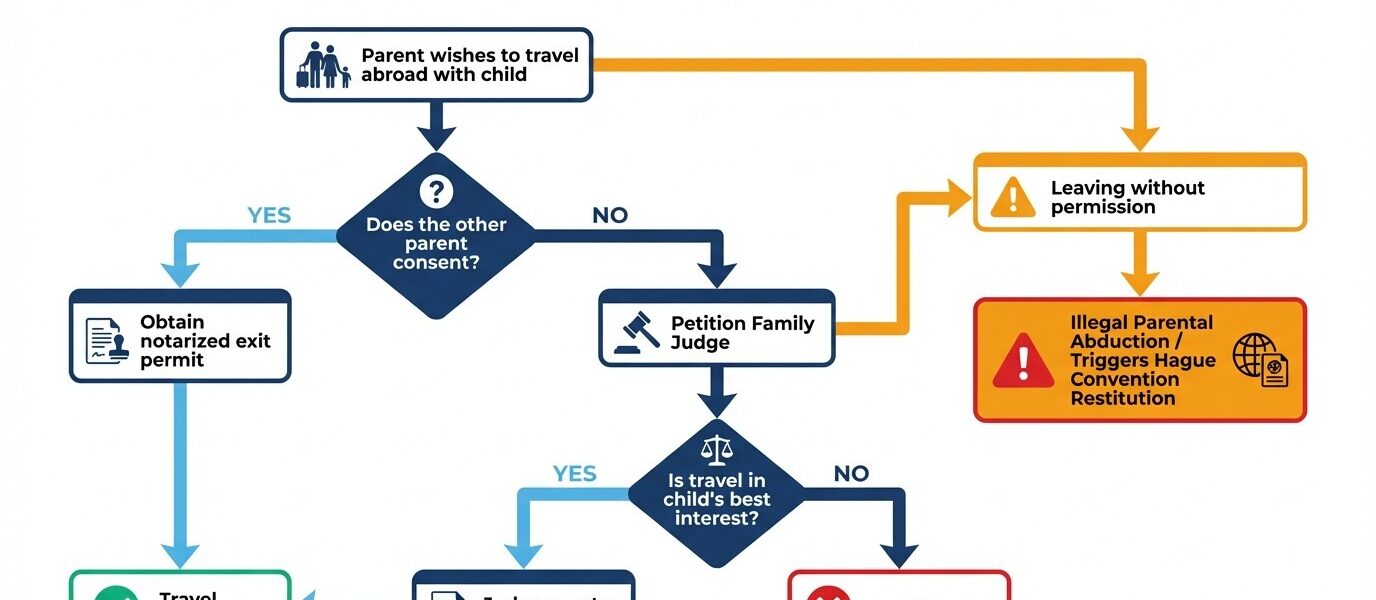
Three — and this is the most important thing in this entire column: whatever you do, do not attempt to remove the children from Colombia without authorisation, and don’t let frustration talk you into “just keeping them” after an approved visit abroad. Colombia is a signatory to the Hague Convention on international child abduction. That route would devastate your legal position, likely permanently, and — more importantly — it would traumatise the two people you’re fighting for.
You have rights. You have options. You even have a system that, whatever its bureaucratic frustrations, takes the principle that children need both parents seriously. But the clock is running, and informal promises are not a parenting plan. Get the framework in place — and then rebuild the relationship inside it, one scheduled, enforceable, un-cancellable Sunday call at a time.
Got a question about life abroad? Write to us — your letter might be featured in a future column.