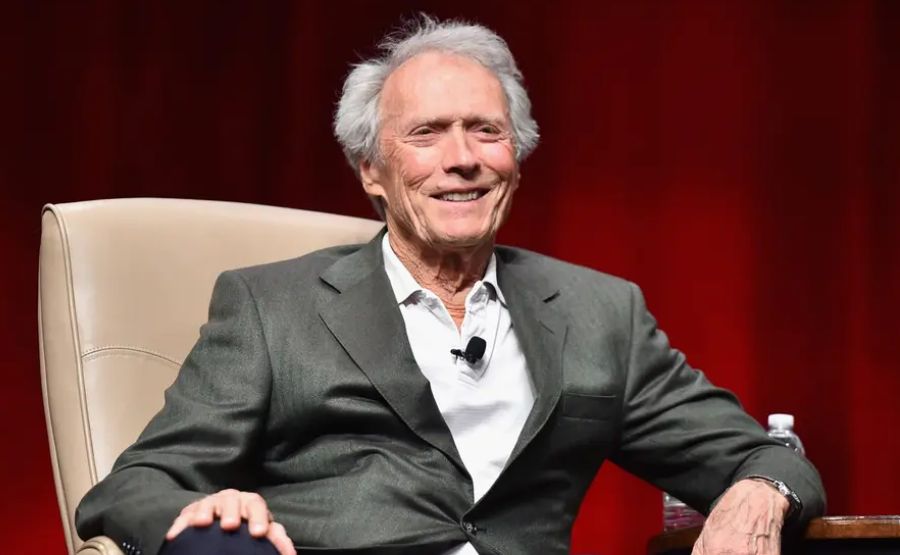

Here’s something that should annoy you a little. A guy who barely speaks in half his own movies has made more money than most chatty Hollywood A-listers combined. Clint Eastwood built an empire out of silence, scowls, and real estate deals nobody saw coming. When people discuss him, they omit that portion.
He’s 96 now. He’s reportedly done making films. And he’s sitting on something close to $400 million. Let’s get into how a kid who got expelled from high school for a prank scoreboard ended up owning chunks of Pebble Beach.
Quick Bio
| Detail | Information |
| Full Name | Clinton Eastwood Jr. |
| Born | May 31, 1930, San Francisco, California |
| Age | 96 (as of June 2026) |
| Net Worth | Estimated $375–400 million |
| Profession | Actor, director, producer, composer, former mayor |
| Years Active | 1955–2024 (reportedly retired) |
| Breakout Role | Rowdy Yates in Rawhide (1959) |
| Iconic Roles | The Man With No Name, Harry Callahan |
| Directing Highlights | Unforgiven, Million Dollar Baby, American Sniper |
| Oscars | 5 (including 2 Best Director, 2 Best Picture) |
| Political Stint | Mayor of Carmel-by-the-Sea, 1986–1988 |
| Children | 8, with 6 different women |
| Production Company | Malpaso Productions |
That table doesn’t even cover half of it. Stick around.
So What’s He Actually Worth?
Depends who you ask, honestly.He was estimated by Celebrity Net Worth to be worth $375 million in 2026, but by March, that figure had risen to $400 million. Nobody’s auditing this man’s bank statements, so treat these as educated estimates, not gospel.
Either way you slice it, the man’s worth nine figures. For an actor who started out making $75 a week at Universal, that’s not a small jump. That’s not even a big jump. That’s a different universe.
See also “Bindi Irwin: The Woman Who Grew Up Inside a Zoo and Never Really Got to Choose“
The Part Nobody Talks About: He Was Almost Cut From The Business
Universal signed him in 1954. Paid him peanuts. Gave him bit parts in stuff like Tarantula and Revenge of the Creature — yeah, killer-spider B-movies, not exactly prestige work. Then they dropped his contract entirely.
Most people would’ve packed it in right there. He didn’t. He kept grinding through tiny roles until Rawhide picked him up in 1959. Funny thing — Rowdy Yates wasn’t even supposed to be the lead character. Eastwood basically out-charisma’d his way into stardom over eight seasons.
He made $700 an episode back then. Sounds quaint until you remember actors today pull a million bucks per episode on streaming shows. Inflation explains some of that gap. The rest is just how much the entertainment economy has exploded since.
The Spaghetti Westerns Made Him — And He Made Sure He Got Paid For It
Sergio Leone cast Eastwood as the Man With No Name for A Fistful of Dollars in 1964. Paycheck? $15,000. Almost nothing.
By the third movie, The Good, the Bad and the Ugly, he wasn’t playing nice anymore. He negotiated $250,000, a cut of U.S. profits, and — this is the detail that always gets me — a Ferrari. He was given a real sports automobile as part of his deal. The guy understood leverage before half of Hollywood figured out what leverage even meant.
This is where you start to see the pattern. Eastwood wasn’t just acting. He was studying the business side the entire time, quietly, while everyone assumed he was just the strong, silent type with good bone structure.
Dirty Harry, Controversy, And The Money That Came With It
When “Dirty Harry” came out in 1971, Eastwood became well-known for playing the trigger-happy, law-breaking police officer Harry Callahan. Big hit. Also big backlash. Critics called it borderline fascist. Some accused it of leaning into ugly stereotypes about crime and race in American cities.
Eastwood shrugged most of it off, which has basically been his entire public-relations strategy for seven decades. Make the thing. Let people argue about it. Don’t explain yourself. The Dirty Harry franchise ran five films deep and made him a fortune, controversy and all.
You can question the politics of those movies all day — plenty of critics still do — but you can’t argue with the box office.
Then He Started Directing, And That’s Where The Real Money Lives
Play Misty for Me in 1971 was his directorial debut. Small horror thriller, modest $10.6 million gross, but it proved something: Eastwood wasn’t just a face. He could run a set.
From there, he built Malpaso Productions, his own company, and basically refused to be just an actor for hire ever again. That’s the smartest financial decision of his entire career, arguably smarter than any single paycheck. Owning your own production pipeline means you’re not waiting around for someone else to cut you a check — you’re the one cutting checks, and keeping a much bigger slice of whatever comes back.
He’s directed 40 films total. Forty. Most directors are lucky to get a dozen greenlites in a lifetime.
Unforgiven and Million Dollar Baby: The Two Oscars That Mattered Most
Unforgiven (1992) won Best Picture and Best Director. Million Dollar Baby (2004) did the exact same thing, twelve years later. Two different decades, same trick.
Here’s the thing about Million Dollar Baby — it also got him heat. Disability rights activists protested the film in multiple cities over how it handled the ending. Eastwood didn’t back down. He rarely does. Say what you want about the guy, he doesn’t seem interested in apologizing for his art.
That film alone pulled in over $200 million worldwide. Directors at his level typically pocket multi-million-dollar fees plus backend points on a hit like that. We don’t have the exact number. We don’t need it to know it was substantial.
American Sniper Was His Biggest Commercial Hit, And His Most Divisive
$547 million worldwide. That’s not a typo. That’s Eastwood’s highest-grossing film by a wide margin, and he wasn’t even in it — just directing from behind the camera.
It also split the country in half. Some called it a powerful character study. Others called it war propaganda dressed up as art. Eastwood’s response, more or less: that’s a stupid take, and the movie wasn’t about politics. Make of that what you will.
Whatever your opinion on the film’s politics, the financial outcome speaks for itself. This thing printed money.
The Sondra Locke Mess: Hollywood’s Ugliest Breakup Lawsuit
Okay, here’s where the “tough guy with no name” image gets a serious dent. Eastwood and actress Sondra Locke were together 14 years, unmarried, living together. Then it ended — badly. He had the locks changed on their shared home while she was still off filming her own movie. Her stuff got boxed up and put in storage. She found out through a letter from his lawyers.
She sued. $70 million palimony suit. In his deposition, Eastwood famously downgraded her status from “roommate” to “part-time roommate,” which is one of the coldest things a person can say about someone they lived with for over a decade.
It got worse. After an initial settlement that included a development deal at Warner Bros., Locke claimed the whole thing was fake — that the studio rejected every single one of the 30 projects she pitched, by design, just to sideline her career. She sued again. A jury reportedly leaned 10-2 in her favor before the two sides settled out of court in 1996.
Here’s the part that should stick with you: Eastwood basically erased her from his own story afterward. His 1997 documentary about his own career? Doesn’t mention her once. Not a single time, despite over a decade together and multiple films made side by side.
Make of that whatever you want about the man behind the legend.
He Was The Mayor Of A 4,000-Person Town. Seriously.
In 1986, Eastwood ran for mayor of Carmel-by-the-Sea, California. Tiny town. Wealthy, artsy, population barely scraping 3,200 at the time. He won in a landslide — 2,166 votes to 799 against the incumbent.
His campaign promises weren’t exactly earth-shattering.He battled to make eating ice cream cones on the street permissible, as it had previously been prohibited. He pushed through public restrooms on the beach and a library annex that had been stuck in red tape for 25 years.
Salary for being mayor? $200 a month. He gave it to the youth center in the area. The man didn’t need the money — he needed the principle of the thing, apparently.
Two years in, he got bored of garage-roof zoning disputes and bailed. Didn’t run again. Went back to making movies.
The Real Estate Empire Nobody Talks About Enough
This is where Eastwood quietly built a second fortune most fans never think about. He owns a sprawling estate in Carmel-by-the-Sea that reportedly cost $20 million to build. A home in Bel Air. A massive 1,067-acre ranch up in Burney, California. Oceanfront property in Maui. A house in Sun Valley, Idaho.
Then there’s Teháma — his private golf community carved out of over 2,000 acres in the hills above Carmel. Original lots there sold for $1.5 to $6.25 million apiece. He kept the best lot for himself, naturally, and built a 16,000-square-foot mansion on it.
And then there’s Pebble Beach. In 1999, Eastwood joined a small investor group — including former MLB commissioner Peter Ueberroth and golf legend Arnold Palmer — to buy the Pebble Beach Golf Links outright for $820 million. Eastwood put in $20 million of his own money. Within two decades, that investment reportedly tripled in value.
So next time someone tells you Hollywood money disappears fast, point them toward this guy’s real estate folder.
What He’s Actually Made From Movies, Salary By Salary
A rough breakdown, pulled from publicly tracked figures:
- Rawhide (TV): $700/episode starting out
- A Fistful of Dollars (1964): $15,000
- For a Few Dollars More (1965): $50,000
- The Good, the Bad and the Ugly (1966): $250,000 + 10% of US profits + a Ferrari
- Hang ‘Em High (1968): $400,000 + 25% of net box office
- Where Eagles Dare (1968): $750,000
- Coogan’s Bluff (1968): $1 million
- Every Which Way But Loose (1978): roughly $12 million with backend points
- City Heat (1984): $5 million
- In the Line of Fire (1993): $7 million
Notice the jump between 1964 and 1968. Four years. Fifteen grand to a million bucks. That’s not luck. That’s a guy who learned to negotiate fast and never looked back.
Is He Really Retired?
It looks that way. Juror #2, released in 2024, is being treated as his final film — 40th as director, a strong 93% on Rotten Tomatoes, and yet Warner Bros. barely gave it a theatrical release, which honestly feels like a weird way to send off a guy who’s made the studio money for fifty years.
His son Kyle, a jazz musician who’s scored several of his father’s films, confirmed in interviews around Eastwood’s 96th birthday in May 2026 that his dad has “retired.” No fireworks, no farewell tour, no big press conference. Just a quiet exit, which honestly fits the guy’s whole brand better than any big sendoff ever could.
He’s also dealt with personal loss recently — his girlfriend of about a decade, restaurant hostess Christina Sandera, passed away in mid-2024. That kind of thing tends to reshuffle priorities at any age, let alone at 94 going on 95.
Final words
Here’s my honest take. Clint Eastwood’s fortune isn’t really a story about acting talent, even though the talent is real. It’s a story about leverage. He figured out early — way earlier than most stars of his generation — that the money isn’t in the paycheck, it’s in ownership. Own your production company. Own your real estate. Own a piece of the golf course your celebrity friends play on.
Mythologizing Eastwood’s “strong, silent man” persona is a popular practice.But when you take off the poncho and squint, you’ll find a cunning, often brutal businessman who built a $400 million empire in politics, real estate, and cinema out of a Western TV gig.
Was he a saint along the way? The Sondra Locke saga says no. Was he smart? Undeniably. Fame culture wants you to pick a tidy narrative — hero or villain — but Eastwood’s story doesn’t fit that box, and honestly, neither does anyone’s if you look closely enough.
He earned the money. How he treated people while earning it is a separate conversation, and one worth having.
FAQs
1. How much will Clint Eastwood be worth in 2026?
Estimates range between $375 million and $400 million, depending on the source and when it was last updated.
2. What was Clint Eastwood’s primary source of income?
A mix of acting salaries, directing fees, box-office backend deals, his own production company Malpaso, and a sizable real estate and golf course portfolio.
3. What was Clint Eastwood’s first paying acting job?
A contract with Universal Studios in 1954 paying $75 a week, which led to small parts in B-movies before the studio dropped him.
4. How much did Clint Eastwood get paid for the Dollars Trilogy?
$15,000 for the first film, $50,000 for the second, and $250,000 plus a Ferrari and profit points for the third.
5. Did Clint Eastwood really own part of Pebble Beach?
Yes. He joined an investor group that bought the Pebble Beach Golf Links for $820 million in 1999, contributing $20 million himself.
6. Was Clint Eastwood actually a mayor?
Yes, of Carmel-by-the-Sea, California, from 1986 to 1988. He won with 72% of the vote and served one term.
7. How many children does Clint Eastwood have?
Eight, with six different women, though the exact count has reportedly been disputed by biographers over the years.
8. What happened between Clint Eastwood and Sondra Locke?
A 14-year relationship that ended with Eastwood changing the locks on their shared home, followed by years of palimony and fraud lawsuits that finally settled in the late 1990s.
9. Is Clint Eastwood retired from acting and directing?
By most recent accounts, yes. His son Kyle confirmed it around his 96th birthday in 2026, with Juror #2 (2024) standing as his final film.
10. How many Oscars has Clint Eastwood won?
Five total, including two for Best Director and two for Best Picture, plus an honorary Irving G. Thalberg Memorial Award.
11. What is Clint Eastwood’s highest-grossing movie?
American Sniper (2014), which pulled in roughly $547 million worldwide, even though Eastwood only directed it and didn’t appear on screen.
12. Does Clint Eastwood still own businesses in Carmel?
Yes, including the Mission Ranch Hotel and Restaurant and the Teháma golf community, which he developed himself on land he acquired in the early 1980s.
13. What political party is Clint Eastwood associated with?
He’s historically leaned Republican, voting for figures from Eisenhower to McCain and endorsing Mitt Romney in 2012, but he’s also publicly broken from the party on issues like gay marriage and is reportedly now a registered Libertarian.
14. Why was American Sniper controversial?
Critics argued it glorified war and military violence, while supporters defended it as a grounded character study of a real soldier. Eastwood dismissed the political framing entirely.
Keep discovering, connecting, and thriving with The Nexus Magazine every day.