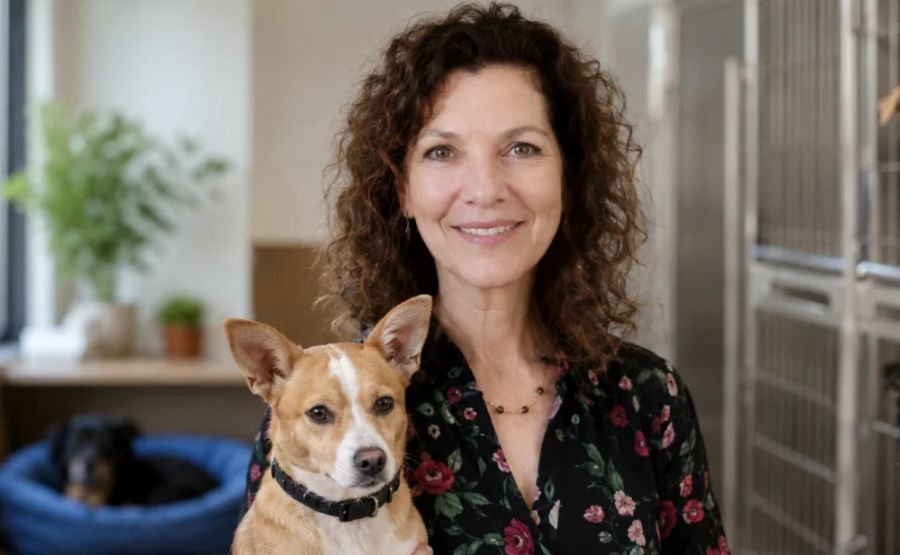
Donna Sicuranza: The Woman Who Changed 225,000 Lives — And Nobody Gave Her a Trophy

The name “Donna Sicuranza” generates thousands of web searches. And almost nobody writing about her gets it right. Half the internet thinks she’s a deceased banker from New York. Another chunk insists she’s married to Judge Greg Mathis. Neither claim, as it turns out, holds up cleanly under scrutiny.
The real Donna Sicuranza — the one with a documented, verified, decades-long paper trail — is a nonprofit executive quietly working out of Westbrook, Connecticut. She has helped over 225,000 cats receive medical care. She doesn’t have a publicist. She’s not on reality TV. She’s not married to a judge with a courtroom show.
She just… works. Every single day. And that, honestly, is the most interesting thing about her.
Quick Bio
| Detail | Info |
| Full Name | Donna Sicuranza (also Donna Sicuranza Marconi) |
| Based In | Westbrook, Connecticut, USA |
| Known For | Executive Director, Tait’s Every Animal Matters (TEAM) |
| Education | M.A. from Trinity College Hartford (1989–1992); B.A. from Fairfield University (1978–1982) |
| Early Career | Freelance writer, editor, PR specialist (1983–1997) |
| TEAM Role Since | March 1997 |
| Cats Helped | 225,000+ |
| Public Social Media | None documented |
| Spouse | Jim Marconi (per TEAM records) |
The Internet’s Messy, Confused Take on “Donna Sicuranza”
Here’s where it gets a little chaotic — and worth addressing head-on.
If you search for “Donna Sicuranza,” you will find a vast jumble of inaccurate articles. Some sites describe a woman born March 24, 1942, who passed away in 2017 — a banker named Donna Marie Sicuranza from Pelham, New York, who worked at the Bank of New York for over two decades. She was real. She existed. She was, by all accounts, a devoted grandmother and an admirable person.
But she is a different person.
Then there are sites claiming Donna Sicuranza is married to Judge Greg Mathis. That claim appears to originate from thin air. Linda Reese Mathis is the real wife of Judge Mathis. The two women share neither a name, nor a life, nor any verifiable connection. Someone wrote it once, other sites copied it, and now it floats around like a bad rumor at a family reunion.
This is what happens when internet “biography” culture chases SEO instead of facts. A real name, attached to real work, gets buried under fiction and misattribution.
The Donna Sicuranza worth writing about has been in the same role, doing the same vital work, since 1997. Let’s talk about her.
See also “Stephanie Sarkisian: The Woman Who Walked Away Before Everything Fell Apart“
She Came From Books, Not Biology Labs
Donna Sicuranza’s academic foundation was rooted in the humanities — specifically English language and literature. She completed her bachelor’s at Fairfield University between 1978 and 1982, then followed that with a master’s degree from Trinity College in Hartford, finishing in 1992.
Not a vet. Not a biologist. An English major.
Which, honestly, makes the next 30 years of her life more interesting, not less. Because she built one of Connecticut’s most enduring animal welfare programs using skills most people would never associate with cat surgery logistics. Storytelling. Messaging. Fundraising. Knowing how to explain something complicated to someone who doesn’t already care about it yet.
From January 1983 to October 1997, she worked as a freelance writer, editor, and public relations specialist in Connecticut and New York. Fourteen years of sharpening exactly the kind of communication tools that a small nonprofit desperately needs to survive.
Most people who enter the nonprofit world never have that background. They have passion, which is great — but passion without messaging strategy bleeds donors dry in two funding cycles. Donna came in ready.
1997: A 22-Foot Van and Twelve Cats
Here’s the actual origin story, and it’s a good one.
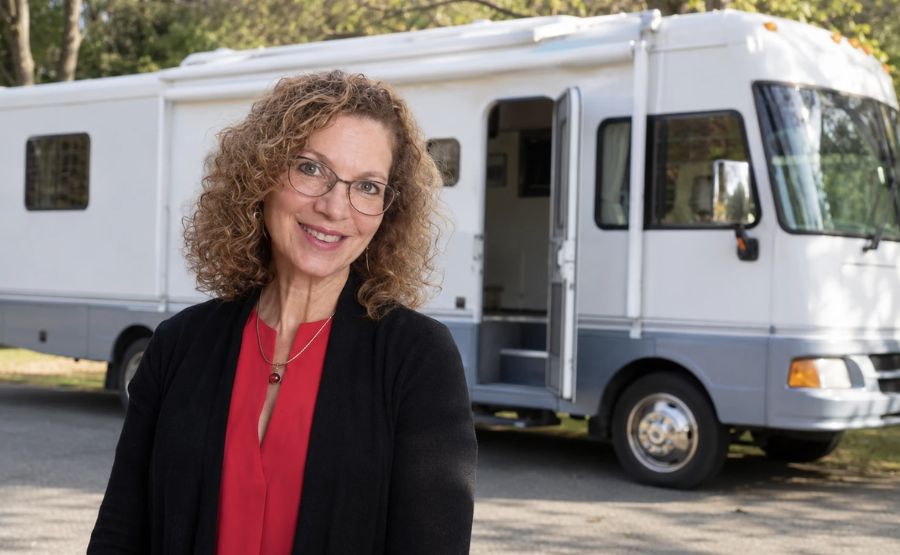
In 1997, Tait’s Every Animal Matters launched Connecticut’s very first mobile feline spay, neuter, and vaccination unit — a 22-foot vehicle. On the program’s opening day, the team performed procedures on twelve cats inside that cramped space. Dr. John A. Caltabiano, the organization’s president at the time, played a central role in getting the unit operational.
Donna Sicuranza stepped in as Executive Director from day one.
Twelve cats. A van that barely fit the staff. Zero guarantee this thing would still be running a decade later, let alone three decades later.
That green-and-white mobile unit became the foundation of what grew into one of Connecticut’s longest-running feline welfare programs, crisscrossing the state five days a week to bring affordable veterinary services to cat owners who otherwise had nowhere else to turn.
Think about that for a moment. Five days a week. Every week. For over 25 years. That’s not a passion project. That’s infrastructure.
What TEAM Actually Does — And Why It Matters More Than People Realize
People hear “cat spay clinic” and immediately think: cute, niche, limited impact.
They’re wrong.
Feline overpopulation isn’t just an animal issue. Communities with real access to affordable spay and neuter services tend to see fewer cats entering shelters, less pressure on rescue organizations, and a measurable improvement in overall animal welfare outcomes over time.
When you don’t address the root cause — uncontrolled reproduction — you’re just playing whack-a-mole with shelter intake numbers forever. TEAM chose a different approach.Avoid the issue before it escalates into a crisis.
According to TEAM’s public records, the organization has provided services for more than 225,000 cats since launching in 1997.
Two hundred and twenty-five thousand. Let that sink in.
That’s not a charity bake sale outcome. That’s a public health achievement with fur on it.
The mobile unit visits dozens of locations across Connecticut — from shopping center parking lots to Tractor Supply store locations — operating on a schedule designed to reach people who face financial barriers, transportation limits, or simply don’t live near a traditional veterinary clinic.
This is the unglamorous, practical, deeply necessary work that keeps communities functional. No cameras. No viral moments. Just a van showing up where it’s needed.
Running a Nonprofit Nobody Talks About — For 29 Years
Let’s be blunt about something.
Running a small nonprofit for almost three decades is brutally difficult. Donor fatigue is real. Staff turnover in mission-driven organizations is brutal. Operating a mobile veterinary service means the logistics never stop — scheduling, equipment maintenance, medical staffing, community communication, and finances that are always tighter than you’d like.
The TEAM clinic operates on thin margins, depending on donations to keep its fees affordable, and requires veterinary staff to commute considerable distances. It is not due to institutional support or celebrity endorsement that it has endured for more than 25 years.
It persisted because someone kept showing up and doing the work.
Under Donna Sicuranza’s leadership, TEAM expanded its presence within Connecticut’s animal welfare community and developed recognition for a data-informed, prevention-centered approach to reducing cat overpopulation. Her responsibilities have spanned program management, fundraising, public education, community outreach, and organizational development.
That’s the full job description of about four people. She’s been doing it since the Clinton administration.
The Privacy Question: No Instagram, No Publicity Tour
Here’s something refreshing and maybe a little strange in 2026.
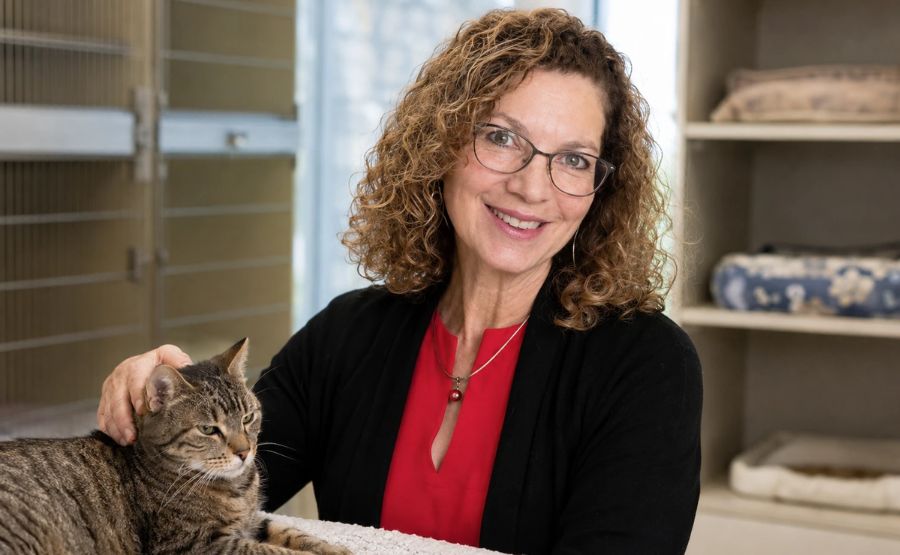
There is no reported public social media presence for Donna Sicuranza. Her work is represented through Tait’s Every Animal Matters’ organizational channels rather than through any personal platform.
She’s been running a major animal welfare operation for nearly 30 years. Not a single verified Instagram post. No Twitter. No LinkedIn profile plastered across search results.
This is, to put it mildly, not how people operate in 2026.
Nevertheless, the work was completed in some way. The cats still got spayed. The van still showed up. Makes you wonder how much energy gets wasted on personal branding when the actual mission just needs people willing to drive a van somewhere and do surgery on a Tuesday.
Her professional name appears in TEAM records as Donna Sicuranza Marconi, and her husband is identified as Jim Marconi. That’s essentially the extent of what’s publicly known about her personal life. She has clearly chosen to keep it that way — and honestly, who are we to argue with that choice?
The Communications Edge Nobody Talks About
Here’s what separates Donna from the average nonprofit director who burns out in five years and calls it a life lesson.
Effective animal welfare work requires not just operational strength but the consistent capacity to inspire donors, educate the public, and build lasting partnerships. Her communications background proved directly useful in this regard.
Most nonprofit leaders understand their cause deeply. Fewer understand how to explain their cause to people who don’t already care. Donna’s fourteen years in writing and PR gave her a skill that’s genuinely rare in this sector — the ability to translate urgent, unsexy work into something a donor will actually fund.
Low-cost cat spay clinics don’t write their own fundraising copy. Someone has to make the case that this matters. She’s been making that case, apparently successfully, for nearly three decades.
The Donna Marie Sicuranza Confusion — Setting the Record Straight
Because it deserves its own section.
Donna Marie Sicuranza was born on March 24, 1942, and passed away on March 10, 2017, at age 74. She worked at the Bank of New York for more than 20 years and retired as an Assistant Manager. She and her husband Angelo Sicuranza raised three daughters and had ten grandchildren. She loved to travel — Italy, South Africa, Australia, and New Zealand among her destinations.
By all accounts, she was a warm, devoted, admirable woman who lived a full and meaningful life in Pelham and the surrounding New York area. Her family gathered at Pelham Funeral Home and St. Catharine’s Church to celebrate her life in March 2017.
Responsible biographical writing should keep this identity separate from Donna Sicuranza Marconi of TEAM. The two names appear in the same search results, but they refer to completely different people.
Merging them isn’t just inaccurate. It disrespects both women. They each deserve their own story told correctly.
Final Words
You want the hot take? Here it is.
We live in an era where a person can go viral for eating cereal wrong, accumulate a million followers, and be called an “influencer” with a straight face. Meanwhile, someone like Donna Sicuranza spends 29 years quietly ensuring that 225,000 cats don’t contribute to a cycle of overpopulation and suffering — and most people have never heard of her.
That’s not a tragedy. That might actually be the point.
She’s not building a personal brand. She’s building a community resource. And there’s something genuinely countercultural about a professional in 2026 who has no verified social media, chooses to be identified through her organization rather than her personality, and just… keeps going.
The internet searches looking for her are growing. And ironically, the more people search, the more they find articles that get her wrong. The blogger culture wants a celebrity. The nonprofit sector has a worker.
Donna Sicuranza is a worker. And 225,000 cats would probably thank her — if cats did that sort of thing.
FAQs
1. Who is Donna Sicuranza?
She is an American nonprofit executive and animal welfare leader who has served as Executive Director of Tait’s Every Animal Matters (TEAM) in Connecticut since 1997.
2. Describe Tait’s Every Animal Matters (TEAM) program?
It’s a nonprofit organization based in Westbrook, Connecticut, focused on reducing feline overpopulation through affordable spay, neuter, and vaccination services via a mobile clinic model.
3. How many cats has TEAM helped under her leadership?
Over 225,000 cats have received services since the program launched in 1997.
4. Where did Donna Sicuranza go to school?
She earned a bachelor’s degree from Fairfield University (1978–1982) and a master’s degree from Trinity College in Hartford (1989–1992), both rooted in the humanities.
5. Is Donna Sicuranza married to Judge Greg Mathis?
No. That claim appears to be unverified and likely originates from content confusion online. Judge Greg Mathis’s wife is Linda Reese Mathis. There is no credible connection between Judge Mathis and Donna Sicuranza.
6. Is Donna Sicuranza who died in 2017 the same person?
No. Donna Marie Sicuranza (1942–2017) was a New York-area banking professional — a completely separate person from the Connecticut nonprofit executive Donna Sicuranza Marconi.
7. What was Donna Sicuranza’s career before TEAM?
She worked as a freelance writer, editor, and public relations specialist from 1983 to 1997 in Connecticut and New York.
8. What does TEAM’s mobile clinic actually do?
It travels across Connecticut five days a week, delivering affordable spay, neuter, and vaccination procedures for cats — targeting communities where cost or transportation barriers make traditional vet care difficult to access.
9. Does Donna Sicuranza have social media?
No verified or documented personal social media accounts exist for her. She maintains a low public profile by design.
10. What is her full professional name?
She appears in official TEAM organizational materials as Donna Sicuranza Marconi.
11. Why is there so much confusing or inaccurate information about her online?
Because her name shares overlap with another woman (Donna Marie Sicuranza), and some content farms have merged these identities or fabricated connections without proper sourcing. SEO-driven biography mills prioritize volume over accuracy.
12. Where is TEAM based and how can you contact them?
Tait’s Every Animal Matters is headquartered at PO Box 591, Westbrook, CT 06498. They operate as a registered 501(c)(3) nonprofit charitable organization.
Keep discovering, connecting, and thriving with The Nexus Magazine every day.