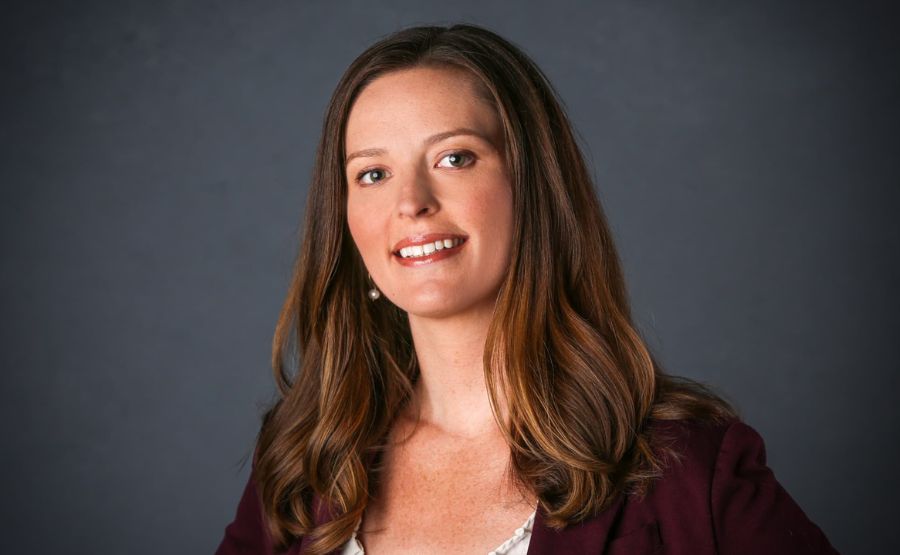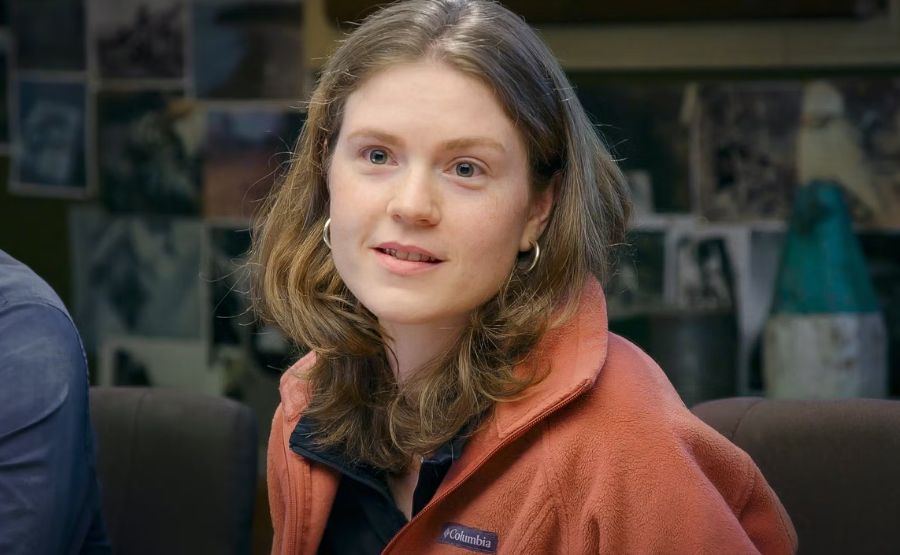

Quick Bio
| Detail | Info |
| Full Name | Emma Culligan |
| Birth Name | Emma Culligan (née surname from father Brent Culligan) |
| Estimated Birth Date | August 11, 1992 (some sources; not publicly confirmed) |
| Birthplace | Japan |
| Nationality | Canadian (Japanese-Canadian) |
| First Language | Japanese |
| Mother | Shirley Hardin |
| Father | Brent Culligan |
| Siblings | Brother Luke (b. June 7, 1995), Sister Megan |
| Education | Dalhousie University (Halifax); Memorial University of Newfoundland – Civil Engineering & Archaeology |
| Specialisation | Archaeometallurgy, XRF, XRD, CT Scanning |
| TV Show | The Curse of Oak Island (History Channel, Season 10 onward – 2022 to present) |
| @emma_anastazi | |
| Relationship Status | Private – never publicly confirmed |
| Estimated Net Worth | $200,000–$500,000 (estimated, not confirmed) |
She Almost Deleted the Email That Changed Her Life
Let’s start there. Not with her degrees. Not with the show. With the fact that Emma Culligan almost dismissed the most important career opportunity of her life as junk mail.
That’s the real Emma Culligan story. Not polished. Not planned. A completely accidental television career built on top of a genuinely serious scientific mind. That combination — actual expertise wrapped in “how did I even get here?” energy — is exactly why she became a fan favourite almost immediately after appearing on screen.
She didn’t audition. Didn’t chase producers. Didn’t build a social media brand to get noticed. Someone submitted her resume. She thought the reply was spam. Then a proper archaeologist named Laird Niven read her credentials and said, essentially, you’re not becoming a personal assistant — you’re running the XRF lab.
Most people would’ve still been nervous. Emma looked at the equipment and said this can’t be real.
See also “Tyna Karageorge: The Woman Behind the Headlines Nobody Really Talks About Honestly“
Tokyo to Tokyo: The Childhood Nobody Covers Properly
Here’s the part of Emma’s story that should get way more attention than it does.
She was born in Japan. Raised there until she was 15. Not a heritage trip. Not summer visits to grandparents. She lived there, fully immersed, speaking Japanese as her native tongue. Her mother Shirley Hardin left Austin, Texas in September 1985 for a short work stint in Tokyo — and then just… stayed. She fell in love with the country and met a man named Brent Culligan. They built a family there. Emma came first. Then her brother Luke, born June 7, 1995. Then her sister Megan.
Emma didn’t start learning English until she was 15. Think about that. She arrived in Halifax, Nova Scotia — a totally different world — as a teenager. New language, new country, new school system, all at the same time. And she’ll tell you herself that her English felt better in her head than it actually was when she got there.
She posts in Japanese sometimes. I still go back to Japan. The roots are genuine, not decorative.
Two Universities, Three Disciplines, One Very Specific Career
Most people pick one major and complain about it for four years. Emma Culligan collected disciplines like they were going out of style.
She started at Dalhousie University in Halifax — engineering. Then moved to Memorial University of Newfoundland, where she ended up with degrees in civil engineering and archaeology. A professor there told her to add metallurgy. She did. That led her to spending years analysing iron through a scanning electron microscope. Which sounds intensely boring until you realize that’s exactly the skill set needed to look at a piece of metal dug out of an island and tell you it was made in the 1600s.
The niche she built for herself — combining engineering with archaeology — wasn’t an accident. She said herself she wanted to create something specific, a space that didn’t fully exist yet. She made her own lane. Before Oak Island, she was working at Frontier Subsea Inc., an engineering firm in Canada, and doing research assistance work in the archaeology department at Memorial University. Real jobs. Real work. Television wasn’t part of the plan.
Season 10: The Bunk Hook That Started Everything
She didn’t exactly walk in with fanfare. Her very first appearance in Season 10 of The Curse of Oak Island was a video call. She was on a screen in the background of a meeting. That’s genuinely funny. Future fan favourite, future key scientific voice of the show — introduced via grainy video link.
But then the team handed her a piece of metal. She put it through a CT scan and told everyone it was probably a bunk hook — a piece of hardware used on cargo ships. The implication: vessels carrying cargo, possibly treasure, were active near Oak Island. One artifact. Real analytical work. Big historical implications.
That’s how she set the tone. No drama. Just competence.
The Gold Discovery That Changed How Everyone Digs
Okay, this one’s genuinely significant. And it’s the story that best explains what Emma actually brings to the show — not just TV presence, but scientific value.
Using surface analysis and water data, she detected gold residue on a piece of wood pulled from one of the dig sites. Gold. On wood. That’s the kind of thing that doesn’t show up unless you’re running the right tests on the right samples. Archaeologist Laird Niven has said it out loud: her discovery changed how the Oak Island teams treat gold during digs. They changed their process because of what she found.
When she realized what she was looking at, her reaction was apparently “Holy s**t.” And honestly? That’s more relatable than any polished TV moment could be. She wasn’t performing excitedly. She was excited.
That’s the difference between someone doing science and someone playing at it.

The Roman Coin That Lit the Internet on Fire
Season 12, Episode 2. Emma examined a coin fragment dug up at Lot 5. She ran it through comprehensive scanning and determined the alloy was unusual — 70% copper, 16% lead. Not a composition you’d find in coins from the typical periods people associate with Oak Island’s mystery. Her analysis suggested it could be a Roman coin dating somewhere between 200 and 300 AD.
Roman. As in, ancient Rome. On a Canadian island famous for pirate treasure theories.
The internet went appropriately wild. The find doesn’t mean Romans sailed to Nova Scotia — but it hints at trade routes, cross-cultural contact, and historical complexity that reaches further back than most treasure hunters were imagining. Whether the coin is genuinely Roman or not, the fact that Emma identified the unusual composition and raised the question is the whole point. That’s what she does. She gives the show actual scientific grounding.
Season 11 also featured her confirming a hand-forged wrought iron piece with high sulfur content and no manganese — a signature of older metalworking, possibly dating anywhere from 1100 to 1700 AD. A gilded gold button with high phosphorus levels. A silver piece potentially linked to historical accounts of pirate plunder. She analysed all of it. Not for TV effect. Because that’s literally her job.
The Show Itself: Let’s Be Honest About It
The Curse of Oak Island is a reality TV show. That means there’s editing, pacing choices, dramatic music whenever someone sneezes, and a narrative structure built for maximum suspense. The treasure on Oak Island has been “almost found” for many seasons. That’s the format.
But here’s the thing — Emma’s work doesn’t become fake just because the show packages it dramatically. The XRF readings are real. The CT scans are real. The coin alloys are real. The gold residue discovery was real. You can roll your eyes at the show’s production choices and still acknowledge that the science Emma brings is genuine.
What’s interesting is that she seems to navigate this tension pretty well. She’s not a performing scientist — she just is one. The show’s theatrics exist around her. She doesn’t appear to feed into them.
Female Expert in a Very Male Room
This deserves actual acknowledgment rather than a throwaway line.
Since 2014, The Curse of Oak Island has been in operation. For most of its run, the experts, the treasure hunters, the archaeologists — predominantly men. Emma joined in Season 10, 2022. She was one of the only consistent female faces in the field and lab.
And almost immediately, at least one fan online suggested she was probably just getting college credit. An intern. Eye-roll worthy as that comment is, it says something real about how female experts in male-dominated spaces get sized up. Emma had multiple degrees, years of engineering and research experience, and a specialised analytical skillset that most of the crew couldn’t replicate — and someone assumed she was a student getting extra credit.
She didn’t respond to that publicly. She just kept finding gold.
The Private Life Thing: Actually, Let’s Respect It
Some people in the public eye make their personal life their brand. Emma Culligan is not one of those people.
She posts on Instagram (@emma_anastazi), but not often. She shares family moments — her mother Shirley, her siblings. She captions things sometimes in Japanese. She travels. She lives a life that exists mostly outside what cameras record.
Her mother Shirley battled cancer at some point during Emma’s life. Emma has touched on that but never made it a full public narrative. There’s something about how she handles her family story — mentioning her mother as “pocket-sized” in an old post, talking about their disagreements and closeness — that feels like a real person writing about real love, rather than image management.
She’s not married publicly. No confirmed partner. No children were confirmed publicly. People speculate. She ignores it. Good for her.
The Database Dream: Where Emma Actually Wants to Go
Here’s what almost nobody talks about in Emma Culligan’s coverage, and it’s actually the most interesting thing about her ambitions.
She wants to build a global comparative database for archaeological materials. An enormous project — partnering with museums and universities worldwide to aggregate data on ancient metals, ceramics, and artifacts. The idea: researchers would be able to trace the origins of materials, map historical trade routes, and understand metallurgy across civilisations by cross-referencing a shared data pool.
She revealed this on the JFree 906 Podcast in June 2023. She’s already collaborated with institutions including the Fortress of Louisbourg, Acadia University, and the Black Loyalist Heritage Society.
This is not a TV personality talking about “passion projects.” This is a researcher who has a real scientific vision that goes far beyond any treasure island. Oak Island is the platform. The database is the goal.
That context matters. A lot.
Final Thoughts
Fame culture loves a story about someone stumbling into celebrity and riding the wave. Emma Culligan technically has that story — spam email, surprise job offer, fan favourite — but she’s not riding anything. She’s working.
The thing that makes her genuinely interesting isn’t the TV appearances. It’s that she didn’t design herself for television. She designed herself for a very specific scientific niche, got found by television accidentally, and then used the platform to do real work in that niche. That’s not how reality TV is supposed to go.
Treasure hunting shows might make you cynical. I mean — the treasure on Oak Island has been “almost found” for over a decade of programming. But Emma’s contributions to the analysis? Those don’t require your belief in the treasure. They stand independently as real scientific work.
She grew up between two countries and two languages. Built a three-discipline academic identity. Thought a job offer was spam. Found gold residue in wood nobody else was testing. And somewhere in there, she became someone people genuinely root for on a cable TV show.
The algorithm finds people for weird reasons. Sometimes it actually finds the right one.
FAQs
Q1. Who is Emma Culligan?
She’s a Japanese-Canadian archaeometallurgist, civil engineer, and television personality. She joined The Curse of Oak Island on History Channel in Season 10 (2022) and has been a core cast member through Season 13. Her scientific work — using XRF, XRD, and CT scanning to analyse artifacts — has made her one of the show’s most valued contributors.
Q2. Where is Emma Culligan from?
She was born in Japan and lived there until she was approximately 15. Her mother Shirley Hardin originally moved from Austin, Texas to Tokyo in 1985, met her Canadian father Brent Culligan there, and the family settled in Japan before eventually relocating to Halifax, Nova Scotia. Emma is a Canadian national with deep Japanese roots.
Q3. What is Emma Culligan’s first language?
Japanese. She grew up fully immersed in Japanese culture and language. She didn’t start seriously learning English until she was 15 years old, when her family moved to Canada.
Q4. Where did Emma Culligan go to university?
She started at Dalhousie University in Halifax, Nova Scotia, studying engineering. She then transferred to Memorial University of Newfoundland, where she completed degrees in Civil Engineering and Archaeology. A professor there encouraged her to add metallurgy, which she did, specialising in what became archaeometallurgy.
Q5. How did Emma Culligan end up on The Curse of Oak Island?
She didn’t apply in the traditional sense. Someone she knew connected with the show and submitted her resume, with the idea of landing her a personal assistant role. Archaeologist Laird Niven saw her credentials, was impressed, and offered her a proper scientific role operating the XRF system on the island instead. Emma initially mistook the job offer email for spam.
Q6. Is Emma Culligan married?
She has never publicly confirmed a romantic partner, husband, or relationship of any kind. She keeps her personal life private. No confirmed relationship, engagement, or children are on record.
Q7. What is Emma Culligan’s most significant discovery on Oak Island?
A few compete for that title. She found gold residue on a piece of wood using surface analysis and water data — a discovery that actually changed how the dig teams handle gold samples going forward. She also analysed a coin from Lot 5 in Season 12 and identified an unusual alloy composition (70% copper, 16% lead) consistent with a Roman coin potentially dating to 200–300 AD.
Q8. What tools does Emma Culligan use on the show?
Her main tools are XRF (X-ray fluorescence), which identifies the elemental composition of materials; XRD (X-ray diffraction), used for structural analysis; and CT (computed tomography) scanning for detailed internal imaging of artifacts. These allow her to determine the age, composition, and likely origin of whatever the dig teams bring her.
Q9. What is Emma Culligan’s net worth?
No confirmed figure exists. Estimates across various sites suggest somewhere between $200,000 and $500,000, factoring in her television work and professional background. Canadian archaeologists earn roughly $71,000–$97,000 per year on average; her TV income likely sits above that range.
Q10. What are Emma Culligan’s future plans beyond Oak Island?
She has spoken about building a global comparative database for archaeological materials — a project that would partner with major universities and museums worldwide to allow researchers to trace material origins, trade routes, and historical metallurgy practices. She has already worked with institutions including the Fortress of Louisbourg and Acadia University in pursuit of this goal.
Q11. Is Emma Culligan still on The Curse of Oak Island?
As of Season 13 (which premiered November 2025 and aired into 2026), yes — she remains a key member of the team and continues analysing artifacts using her specialised equipment.
Q12. What is Emma Culligan’s Instagram?
Her handle is @emma_anastazi. She doesn’t post frequently, but shares glimpses of her travels, family, and personal life — sometimes with Japanese captions reflecting her cultural background.
Keep discovering, connecting, and thriving with The Nexus Magazine every day.