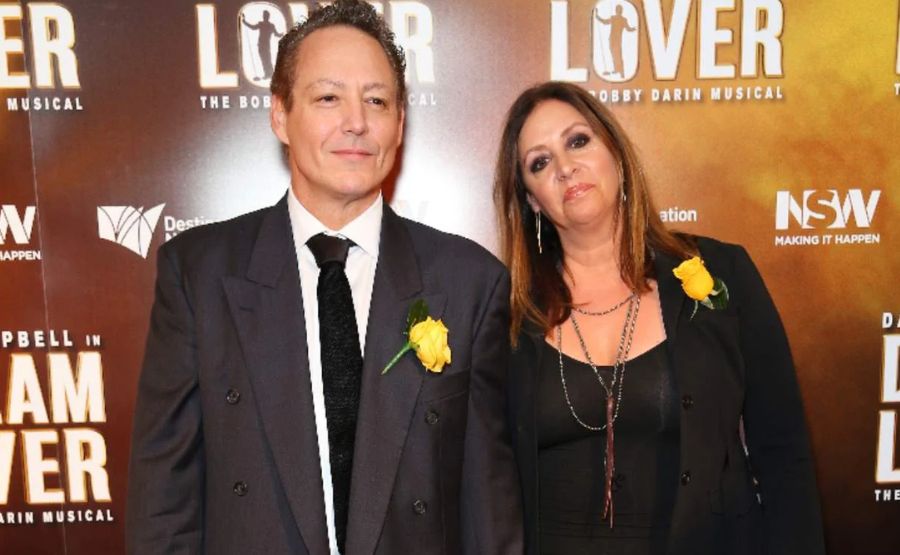
Dodd Mitchell Darin: The Man Who Inherited Two Broken Legends — and Still Showed Up

Here’s something nobody talks about. Dodd Mitchell Darin didn’t grow up in a fairy tale. He grew up in the wreckage of one.
His father was Bobby Darin — “Mack the Knife,” “Splish Splash,” the guy who could walk into any room and make you believe he owned it. His mother was Sandra Dee — America’s favorite girl-next-door, the face that made boys go quiet and girls want to be her. Together they were called Hollywood’s golden couple.
Behind that gold? Alcoholism. Childhood abuse. A father who knew he was dying from age twelve. A mother who couldn’t figure out how to exist outside a camera frame. And a kid caught dead center in all of it.
That kid is Dodd Mitchell Darin. And the story most people don’t bother to tell is his.
Quick Bio
| Detail | Info |
| Full Birth Name | Dodd Mitchell Cassotto |
| Known As | Dodd Mitchell Darin |
| Born | December 16, 1961 |
| Birthplace | Cedars of Lebanon Hospital, Los Angeles, CA |
| Parents | Bobby Darin (father), Sandra Dee (mother) |
| Middle Name Origin | Named after Sandra Dee’s press agent, Betty Mitchell |
| Spouse | Audrey Tannenbaum (married June 5, 1993) |
| Daughters | Alexa Rose Darin (b. 1996), Olivia Rae Darin (b. 2001) |
| Known For | The author, actor, and legacy protector of the estates of Bobby Darin and Sandra Dee |
| Major Work | Dream Lovers: The Magnificent Shattered Lives of Bobby Darin and Sandra Dee (1994) |
| Notable Moment | Accepted Rock and Roll Hall of Fame Award for Bobby Darin, 1990 |
| Estimated Net Worth | ~$2–3 million |
Born in the Shadow of Something Enormous
December 16, 1961. Cedars of Lebanon Hospital, Los Angeles. The same hospital where Natalie Cole, Micky Dolenz, and Liza Minnelli were born. Also, as fate would have it, the exact same hospital where his father would die twelve years later.
Let that sink in for a second.
Bobby Darin was already a chart-topping force. Sandra Dee was THE teenage movie star. When Dodd arrived, cameras were practically waiting outside. America wanted a piece of this baby. This perfect symbol of the perfect union.
Except none of it was perfect. Not even close.
His parents lasted barely six more years before divorcing in 1967. Dodd was six years old when the “dream” split in two. And while the tabloids moved on to the next shiny thing, he was the one left living with the fallout.
See also “Patrick Leno: The Man Who Never Needed the Spotlight — And That’s Exactly the Point“
The Middle Name Has a Story Nobody Tells
Quick detour because this detail is quietly fascinating.
His middle name — Mitchell — wasn’t random. Sandra Dee gave him that name to honor Betty Mitchell, her personal press agent. Think about that. In the middle of Hollywood’s golden age, when image was literally everything, Sandra was close enough to her publicist to name her son after her.
That says something about how these people actually lived. Their “private life” was always half-managed, half-curated. Even Dodd’s name carries a PR fingerprint.
Growing Up Without the Myth
Here’s the thing about being a celebrity’s kid that nobody glamorizes properly.
You don’t get a dad who’s just your dad. Bobby Darin was always Bobby Darin. The man had a career burning so hot you could feel it three rooms away. He knew his heart — damaged by rheumatic fever when he was a boy — was going to kill him young. So he moved at an almost terrifying pace. More songs. More films. More everything.
Dodd watched all this. A kid absorbing a man who was essentially racing the clock.
And then at age twelve, the clock stopped.
Bobby Darin died on December 20, 1973 — four days after Dodd’s twelfth birthday. Complications from open-heart surgery. He was 37 years old. The same man whose voice had filled stadiums, gone silent in an operating room.
I am twelve years old. Imagine that number. Not sixteen, not eighteen. Twelve. Old enough to understand exactly what you lost, too young to know what to do with the grief.
Sandra Dee: The Side Nobody Wanted to See
After Bobby died, Dodd lived with his mother. And Sandra Dee — the woman who had made every teenager in America wish they were her — was quietly unraveling.
She battled addiction. Alcohol and pills. She withdrew from Hollywood so completely she became almost a recluse. The studio-manufactured glow had worn off and underneath it was a woman who’d been abused by her stepfather as a child, controlled by an obsessive mother for her entire career, and never really taught how to be a person without a script.
Dodd watched his mother go through this. He didn’t walk away. He stayed. And years later, he was the one who put her story into print — not to expose her, but because he felt the world had spent decades consuming her image without ever knowing who she actually was.
That’s either an act of loyalty, or of therapy, or both.
The Book That Changed Everything
In 1994, Dodd released Dream Lovers: The Magnificent Shattered Lives of Bobby Darin and Sandra Dee, co-written with Maxine Paetro.
Let’s be clear about the purpose of this book. It didn’t romanticize. It didn’t protect anyone’s reputation. It took the shiny Hollywood poster that two generations had worshipped and flipped it over to show the rust underneath.
Bobby’s secret: the woman he called “mother” his entire childhood — Polly — was actually his grandmother. His real mother was Nina, whom he’d been raised to believe was his sister. He didn’t find this out until he was in his thirties. That kind of foundational deception doesn’t just hurt. It rewires you.
Sandra’s secret: childhood sexual abuse at the hands of her stepfather. A secret her own mother refused to acknowledge. Anorexia by age nine. An eating disorder she carried for decades while America watched her smile on movie posters.
Dodd knew all of this. And he wrote it anyway. Not with cruelty — with the specific kind of honesty that only a son who has wrestled with complicated love for complicated people can produce.
The book sold well. Critics praised the rawness. And it placed Dodd firmly on the map not as a celebrity child coasting on nostalgia, but as someone who actually had something urgent to say.
The Film That Opened Everything Back Up
Fast forward to 2004.
Kevin Spacey — at the peak of his cultural capital before everything went sideways — acquired the film rights to Bobby Darin’s story together with Dodd. Spacey wrote, directed, produced, and starred in the ensuing biopic, Beyond the Sea. He even sang his own numbers.
The critics were divided, honestly almost split down the middle. Some called it a brilliant tribute. Others called it a vanity project. The Rotten Tomatoes score landed at 43%, which in Hollywood terms is a polite way of saying “nobody’s sure what happened here.”
But Dodd approved. He publicly supported Spacey’s dedication and compared Spacey’s fortitude to that of his father who served as a consultant on the production to make sure Bobby was portrayed with some measure of truth — not just the rhinestone-jacket version.
The film bombed commercially. Made around $8 million total. But for Bobby Darin’s legacy, it functioned as a revival. New audiences discovered “Mack the Knife.” The estate got a fresh wave of attention. And Dodd was there, alongside Spacey, at the AFI premiere, making sure his father wasn’t just a footnote.
What Dodd Actually Does — And Why It Matters More Than You Think
Here’s the quiet fact about Dodd Darin that most people completely miss.
He runs the legacy.
He oversees his father’s music catalog. He controls the use of both Bobby Darin’s and Sandra Dee’s names and likenesses. That means every time a documentary uses “Mack the Knife,” every time a streaming platform licenses “Beyond the Sea,” every time someone wants to put Bobby’s face on a book cover — Dodd has a say.
That job sounds administrative. It’s not.
He’s been the gatekeeper between commercial exploitation and genuine remembrance for decades. He determines what it means to honour his parents as opposed to what it means to sell them. Walking that queue is more difficult than it seems.
In 1990, he walked onto the stage at the Rock and Roll Hall of Fame and accepted Bobby’s induction award. Bobby had been dead for seventeen years. Dodd was twenty-eight. Think about what that moment carries — the strange, particular grief of clapping for someone who can’t hear it.
Then in 2010, he took his daughters Alexa and Olivia with him to accept Bobby’s Grammy Lifetime Achievement Award. Two generations of Darins on that stage. That’s not performance. That’s a continuation.
His Daughters Are Carrying This Forward
Alexa Rose Darin was born in 1996. Olivia Rae Darin arrived in 2001.
Alexa’s name isn’t random either — it comes from Sandra Dee’s actual birth name, Alexandra Zuck. Dodd’s daughters grew up knowing who their grandparents were, but they didn’t get hit with it too hard too early. Dodd deliberately kept things measured, apparently learning from what wasn’t measured in his own childhood.
Olivia is said to look so strikingly like Sandra Dee that even she’s admitted to seeing it. Alexa has talked openly about loving Bobby’s music — specifically “Dream Lover.” Neither of them sings professionally, apparently the gene skipped a generation, but both have expressed interest in Hollywood.
They never met Bobby — he died before they were born. They did spend some time with Sandra before she passed in February 2005 from kidney disease. Alexa has recalled her grandmother telling her what it felt like to live in the public eye.
That kind of intergenerational story-passing is the real legacy. Not the awards. Not the catalog royalties. The stories a grandmother tells her granddaughter about the weight of being famous when everyone thought they knew who you were.
His Own Career — Brief, Real, Underrated
People forget Dodd actually showed up on screen.
He had early television roles in the 1980s — The Jerk Too in 1984, an episode of Twilight Zone in 1985, The Bronx Zoo in 1987, The Wonder Years in 1988. Small stuff. He wasn’t chasing stardom, which given who his parents were, was itself a choice worth noting.
He appeared in the 1998 documentary Bobby Darin: Beyond the Song, offering personal recollections. He came back for Beyond the Sea in 2004 in an advisory role.
He also has a musical side. He covered his father’s “Dream Lover.” He performed live at tribute events. Guitar and vocals. He’s said to have recorded a duet with his father using old recordings. It’s the kind of project that sounds gimmicky but when your father is Bobby Darin and you grew up listening to those tracks, it’s probably the most personal thing you can do.
The Wife in the Background of This Whole Story
Audrey Tannenbaum. Remember that name.
She’s a costume designer. She worked on Mad About You. Dodd met her on that set in 1992, married her June 5, 1993, and they’ve been together ever since — more than thirty years now.
That’s almost startlingly stable given the domestic chaos Dodd was born into. His parents couldn’t make it for seven years. He just passed thirty.
There’s probably something in there. Some intentional construction of the ordinary life that was stolen from him at age twelve.
The Bigger Point Nobody Wants to Make
Fame culture wants the biography of Dodd Mitchell Darin to be sentimental. The loyal son. The devoted guardian. The graceful inheritor.
And parts of that are true.
But read more carefully and you find something harder. A man who spent his childhood between a father racing death and a mother drowning in her own fame’s aftermath. Who lost his dad at twelve. Who had to figure out, alone-ish, what it meant to be the son of two very public myths while being a private and actual human.
He wrote an honest book. He didn’t airbrush it. He told the world his mother was abused, his father was built on deceptions, the marriage was less golden than advertised.
That’s not nostalgia management. That’s a kind of bravery people don’t usually credit to celebrity children.
He chose truth over mythology. In Hollywood, that still takes guts.
Final Words
Dodd Mitchell Darin is 63 years old as of 2026. He lives quietly. He doesn’t maintain a loud social media presence. He lets the work speak.
And the work says: I loved my parents enough to tell the truth about themI showed my father adequate respect by attending every significant posthumous event. I understood my mother enough to not let her story get swallowed by her image.
That’s a different kind of legacy than being famous. It’s quieter. It’s more durable.
Bobby Darin once said he wanted to be a legend by the time he was twenty-five. He wasn’t far off. But what Dodd has spent sixty-some years building is something Bobby didn’t have time to construct himself — a full, honest, human record of who these people actually were.
Not the poster. The people.
FAQs
1. Who exactly is Dodd Mitchell Darin?
He’s the only child of Bobby Darin — the singer behind “Mack the Knife” — and Sandra Dee, one of Hollywood’s biggest actresses of the late 1950s and early ’60s. He was born in Los Angeles on December 16, 1961.
2. What does “Mitchell” mean in his name?
It’s not a family name. Sandra Dee chose it to honor Betty Mitchell, her press agent. Even Dodd’s middle name had a PR angle. That’s how enmeshed celebrity life was back then.
3. What is the book Dream Lovers actually about?
Published in 1994, it’s Dodd’s unflinching account of his parents’ real lives — not the Hollywood myth version. He covers Bobby’s secret biological identity crisis, Sandra’s childhood sexual abuse, her anorexia and alcoholism, and the marriage that looked perfect from the outside and was held together by something far messier underneath.
4. Did Dodd write the book alone?
No. He co-wrote it with Maxine Paetro, who went on to collaborate extensively with James Patterson. Paetro’s name is oddly absent from the book’s main title page, which some reviewers pointed out.
5. What was Dodd’s role in the film Beyond the Sea?
He co-acquired the film rights with Kevin Spacey and served as a consultant throughout production. He wanted to make sure the film reflected his father’s actual character, not a cleaned-up Hollywood version. He publicly endorsed Spacey’s performance and commitment to the project.
6. How did Dodd feel about Spacey’s portrayal of Bobby?
He was supportive, even enthusiastic. He compared Spacey’s stubborn resilience as a filmmaker to his father’s own refusal to be pinned down. The film bombed commercially but Dodd stood by it.
7. When did Dodd accept the Rock and Roll Hall of Fame award for his father?
January 17, 1990. Bobby had died in 1973, so Dodd accepted the award seventeen years after his father’s death. He also later accepted a Grammy Lifetime Achievement Award in 2010, this time with both daughters Alexa and Olivia beside him on stage.
8. Who is Dodd married to and how did they meet?
He married Audrey Tannenbaum on June 5, 1993. She was a costume designer who worked on the NBC sitcom Mad About You. They’ve been together over thirty years.
9. What are his daughters’ names and what are they like?
Alexa Rose Darin (born 1996) and Olivia Rae Darin (born 2001). Alexa is named after Sandra Dee’s real birth name, Alexandra Zuck. Olivia reportedly looks strikingly like her grandmother. Both have expressed interest in acting and modeling, though neither has inherited Bobby’s vocal gifts — by their own admission.
10. Does Dodd perform music himself?
Yes, though not as a primary career. He’s a guitarist and singer, has covered Bobby’s songs including “Dream Lover,” and has performed at tribute events. He reportedly recorded a duet using old recordings of his father’s voice.
11. What is Dodd’s current occupation?
He manages the Bobby Darin and Sandra Dee estates. That means controlling music licensing, image rights, and which biographical projects get his family’s endorsement. He essentially decides what counts as honoring his parents versus exploiting them.
12. Why doesn’t Dodd seem more famous himself?
Because he chose not to be. He deliberately stepped away from the limelight despite having every connection to chase it. He gave interviews when the book came out, showed up for the film, and accepted the Hall of Fame award. Then he mostly went back to his life. In a culture obsessed with celebrity offspring, that’s a genuinely rare choice — and probably the most dignified one he could have made.
Keep discovering, connecting, and thriving with The Nexus Magazine every day.