Patrick Leno: The Man Who Never Needed the Spotlight — And That’s Exactly the Point

Quick Bio
| Detail | Info |
| Full Name | Patrick Douglas Muir Leno |
| Born | May 12, 1940 — Manhattan, New York |
| Died | October 6, 2002 — Burlington, Massachusetts |
| Age at Death | 62 |
| Raised In | Andover, Massachusetts |
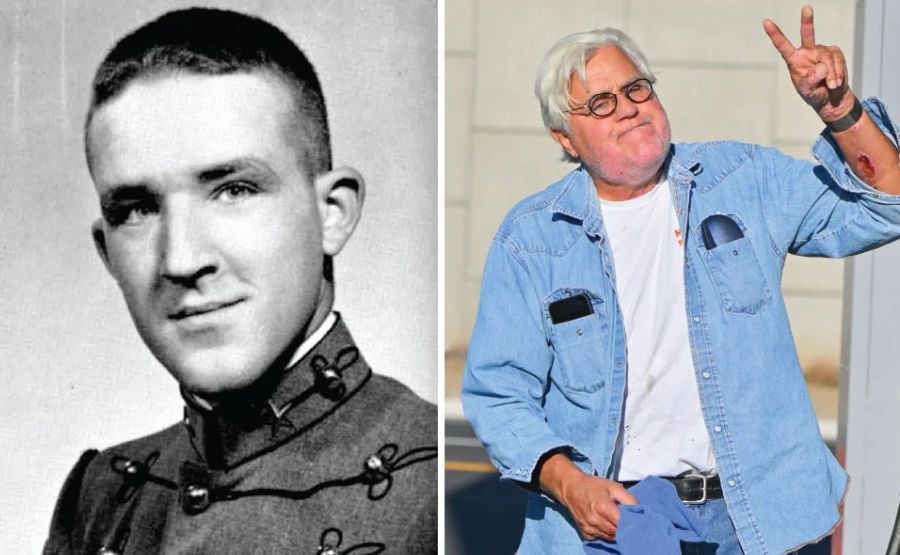
| Education | Pennsylvania Military College → Yale Law School |
| Military | U.S. Army Captain, Vietnam War |
| Career | Attorney |
| Famous Sibling | Jay Leno (younger by 10 years) |
| Parents | Angelo Leno (Italian descent) & Catherine Muir Leno (Scottish-born) |
| Spouse | Married Patricia May Priest (1965); later married Antoinette McNamara |
| Buried | West Parish Garden Cemetery, Andover, Massachusetts |
| Cause of Death | Cancer |
Here’s something the internet won’t tell you straight: the most interesting Leno brother wasn’t on TV.
Not even close.
Patrick Douglas Muir Leno lived and died largely out of public view. He never hosted a late-night show. He never cracked a joke in front of millions. But this man went to Yale Law School, survived the Vietnam War as an Army Captain, and quietly built a real life while his younger brother became one of the most recognized faces in American television. And somehow, Patrick is the one being called the background character.
Think about that for a second.
The Family Nobody Talks About
The Lenos were not a glamorous family. Angelo Leno, their father, was an Italian-American insurance salesman — his own parents had come over from Flumeri, in the Campania region of Italy. Their mother, Catherine Muir, was born in Greenock, Scotland and came to the United States as a child of about eleven. Two immigrants, one family, zero extended relatives nearby. That last part matters more than people realize.
Because when you grow up in a household with no cousins, no aunts, no uncles around — just your parents and one sibling — that bond gets compressed into something dense. Something intense.
Patrick was born first, in Manhattan in 1940. Jay arrived ten years later, in 1950. They weren’t exactly twins in age or in personality, and yet somehow these two wildly different human beings stayed connected for decades.
The family eventually planted roots in Andover, Massachusetts. It’s a quiet New England town. Nothing flashy about it. Perfect, honestly, for a family that valued keeping their heads down and getting things done.
Kid Stuff That Actually Mattered
Patrick in high school wasn’t some generic overachiever. He sang in the choir. He played tennis. He built model ships. None of that screams “future Yale Law graduate,” but in retrospect, it tells you something about who he was — methodical, patient, someone who found satisfaction in putting complicated things together piece by piece.
He attended New Rochelle High School, then made his way through Pennsylvania Military College. That path to Yale wasn’t a straight line, and that’s kind of refreshing. Most of these inspirational bios make it sound like the person just floated naturally from one achievement to the next. Patrick had to work for it.
He got into Yale Law School anyway. And then got really good at it.
Jay would later tell interviewers that Patrick ranked inside the top ten students in the country during his Yale years. Jay said it casually, like a younger sibling recounting a slightly painful memory. In a 2009 interview, he mentioned that their mother used to hide expensive gifts she’d received from Jay — would tell Patrick nothing about them — because she felt a complicated kind of guilt about how success had redistributed itself between her sons.
That detail is quietly devastating. A mother who loved both her children, confused that the less academic one ended up more famous and wealthy. That’s not a simple story. That’s real family life.
Vietnam, and the Things That Don’t Come Back With You
Somewhere in his early twenties, Patrick got drafted.
Vietnam. Late 1960s America. You already know the history — the protests, the casualties, the deep national fracture. Young men shipped overseas, some not coming back, those who did often never speaking about it.
Patrick served as an Army Captain. That’s not a low-rank assignment. That’s responsibility, command, decisions made under fire. He came home.
He never talked much about it publicly. Which is, honestly, the response of a man who actually went through something, as opposed to someone who wants credit for surviving. The quieter veterans usually saw more than they’re willing to put into words. That silence says a lot if you’re willing to listen.
What the war did do — even if indirectly — is sharpen whatever sense of purpose he already had. He came home, didn’t sit around, went straight into building a life. Returned to law. Became an attorney practicing in Massachusetts.
Some sources also mention a possible path in environmental engineering, though that’s less confirmed. What’s clear is he used his education and kept his head down doing actual work. Not exactly newsworthy. That was probably the point.
The Brother Dynamic Nobody Had a Clean Take On
Here’s where it gets complicated — and honestly, more interesting.
These brothers loved each other. That’s clear. Jay bought Patrick a house. Jay kept that house even after Patrick died. He visits it now as a kind of emotional anchor to where he came from.
But there was also awkwardness. Jay himself admitted it in later interviews. They couldn’t have been more dissimilar from one another. Patrick — Yale educated, disciplined, military veteran — and Jay — college in speech therapy at Emerson, did stand-up in clubs, eventually stumbled into the most competitive seat in American late-night television.
Their mother apparently expected Patrick’s path to produce more. It’s not that she didn’t love Jay. It’s that Yale Law + Vietnam + attorney was supposed to equal a certain kind of visible success. It didn’t, in terms of fame and money. Jay’s path — the one nobody really bet on — produced the wealth and the recognition.
Fame is genuinely strange. It doesn’t go where you aim it. And families like the Lenos remind you of that.
Jay said later that the awkwardness between them didn’t fully dissolve until Patrick was almost gone. That’s an uncomfortable thing to sit with. Two people who cared about each other, circling around something unspoken for years. Then time ran out.
The Cancer That Chased This Family
Their mother Catherine died in 1993. Cancer. Jay was just starting his run as host of The Tonight Show — his first season, first big test, his mom gone.
Their father Angelo went the following year, 1994. Also cancer. Jay later said his father essentially had no reason to continue once Catherine was gone. After more than five decades of marriage, Angelo followed her within a year.
Now picture Patrick watching all of this. He helped Jay carry it. He watched both parents taken by the same disease within twelve months of each other.
Then in the late 1990s, Patrick got his own diagnosis.
The same thing. Cancer. The family’s recurring nightmare, coming back for a third time. He went through treatment. He kept going. He didn’t make it dramatic or public. That wasn’t his way.
He died October 6, 2002, in Burlington, Massachusetts. He was 62 years old — just a few months short of 63. Buried at West Parish Garden Cemetery in Andover, the same Massachusetts town where he’d grown up, where Jay still holds onto the family house.
Jay lost his entire biological family in less than ten years. Parents and his only brother. He once said, plainly, that he felt like he had run out of family. Not as a performance. Not as a late-night bit. Just as a fact about his life.
He eventually described the NBC staff and crew as a kind of adopted family. When you’re the last one standing in your bloodline, you build family wherever you can find it.
What Fame Culture Gets Wrong About People Like Patrick
Here’s my problem with how Patrick Leno gets covered online.
Every single article frames him as “Jay Leno’s brother.” Like his entire existence is a supporting role in somebody else’s story. But think about what this man actually did. He made it through a war zone. He graduated from one of the most competitive law schools in the world and placed in its top tier. He practiced law for years and by all accounts did it with integrity.
He didn’t want a spotlight. That was a conscious choice, not a failure.
We’ve built a culture so obsessed with visibility that we’ve started treating privacy as a kind of deficit. As if living quietly is something you do when you couldn’t manage to be famous. Patrick’s life pushes back against that. Hard.
He also outlasted most people’s moral tests. He watched his brother become extraordinarily wealthy and never seems to have made it bitter. He lived on his own terms in the same region where he’d grown up, doing work that mattered to actual clients with actual problems.
That’s not a consolation prize. That’s a pretty solid life.
Jay Kept the House
There’s one detail from the 60 Minutes interview — Jay walking Steve Kroft through the old family home in Andover — that says more than most profiles manage to say in thousands of words.
Jay bought that house for Patrick. When Patrick died, Jay didn’t sell it. His childhood best friend from high school now lives there. Jay described his brother as the “smart one” and himself as “kind of stupid,” the way younger siblings often do, with a mix of admiration and old competitive hurt.
He didn’t let the house go because it was still Patrick. Still the whole family. Still something solid in a life that had become very loud and very public.
That one choice — keeping a house in a Massachusetts town because it connects him to his dead brother — is probably the most human thing Jay Leno has ever done. More human than any monologue.
Final Words
Patrick Leno wasn’t mysterious because he hid something. He was private because some people still believe their lives belong to them.
He served a country that was deeply divided over the very war he fought in. He came home, got his law degree, practiced his profession, loved his brother from a comfortable distance, and died in the same state he’d spent most of his life. No memoir. No press tour. No documentary special.
And here we are, in 2026, still trying to figure out who he was. Maybe that’s the most interesting thing about him. Fame makes you legible to strangers. A life like Patrick’s stays a little opaque, a little yours, even after you’re gone.
There’s something worth respecting in that. Maybe something worth emulating.
He wasn’t trying to matter to you. He just did.
FAQs
1. Who exactly was Patrick Leno?
Patrick Douglas Muir Leno was the older brother of comedian and Tonight Show host Jay Leno. He was born in 1940, served in the Vietnam War as an Army Captain, graduated from Yale Law School, and spent most of his professional life as an attorney in Massachusetts.
2. How much older was Patrick than Jay Leno?
Exactly ten years older. Patrick was born May 12, 1940; Jay was born April 28, 1950. That age gap meant Patrick was more of a guide and role model than just a sibling.
3. Where did Patrick Leno go to school?
He attended New Rochelle High School, then Pennsylvania Military College, and eventually Yale Law School, where he reportedly placed among the top ten students in the country.
4. Did Patrick Leno serve in Vietnam?
Yes. He was drafted into the U.S. Army during the Vietnam War era and served at the rank of Captain. He didn’t speak publicly about his experiences.
5. What did Patrick do for work after the military?
He became a licensed attorney and practiced law in Massachusetts. Some less verified sources mention environmental engineering work as well, though attorney is the most consistently confirmed profession.
6. Was Patrick Leno married?
Yes, twice. He first married Patricia May Priest in March 1965 in Fairfield, Connecticut. He later wed Antoinette McNamara, who was his wife when he passed away.
7. Did Patrick Leno have children?
This remains genuinely unclear. Some genealogy sources and one Bing-sourced reference mention two children, but no confirmed public records name them or describe them. He kept his personal life tightly private.
8. What was Patrick Leno’s cause of death?
Cancer. He died October 6, 2002, in Burlington, Massachusetts, at age 62. His parents had also died from cancer less than a decade earlier.
9. Was Jay Leno’s relationship with Patrick ever strained?
Jay admitted in interviews that there was “an awkwardness” between them, rooted partly in their different life paths and their mother’s complicated feelings about who ended up more “successful.” But they remained close and Jay has consistently spoken of Patrick with deep affection.
10. What did Jay do with Patrick’s house after he died?
Jay had purchased a house for Patrick in Andover, Massachusetts. After Patrick’s death, Jay kept it. He eventually let his childhood best friend live there. He’s described the house as an emotional anchor to his family and his roots.
11. Did Jay Leno have any other siblings?
No. Patrick was Jay’s only sibling. There are no sisters and no other brothers. This made losing Patrick particularly significant — Jay was left as the sole surviving member of the immediate Leno family.
12. Why don’t more people know about Patrick Leno?
Mostly because he didn’t want them to. He lived deliberately away from media attention. He never gave interviews, made public appearances, or sought coverage of any kind. The information that exists about him comes through Jay’s interviews, genealogy records, and cemetery listings.
Keep discovering, connecting, and thriving with The Nexus Magazine every day.