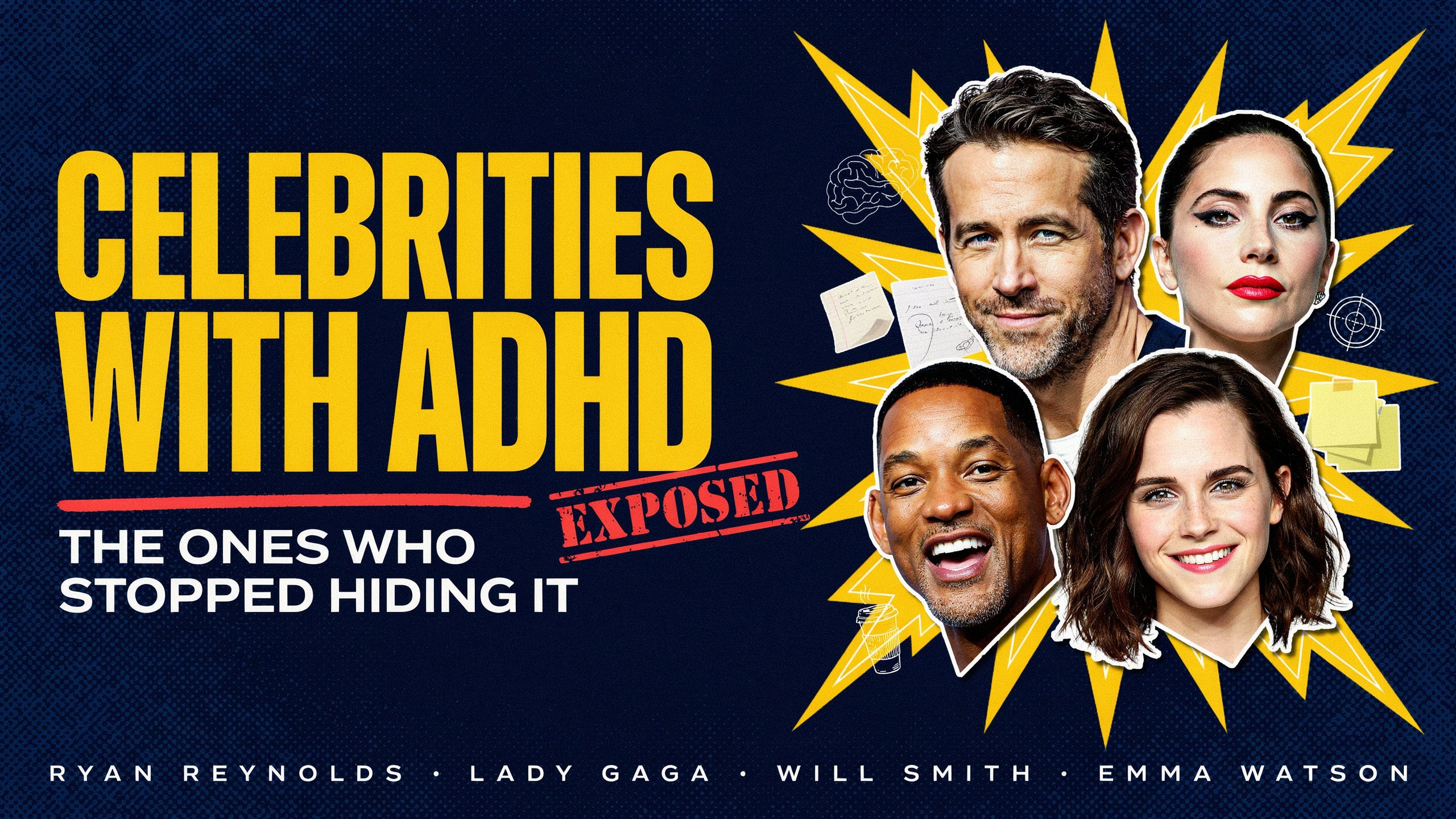

Here’s a stat that should annoy you a little. Millions of adults walk around undiagnosed with ADHD for years, misfiled under “anxious,” “lazy,” or “just dramatic.” Meanwhile a gymnast gets her medical records stolen by hackers trying to shame her — and she just shrugs and posts about it on Twitter like it’s nothing. That’s Simone Biles. That’s the whole tone of this list, honestly. Famous people either bury this stuff for a decade or they say it out loud and dare you to make it weird.
I’m not here to diagnose people or give them stars for “bravery.” I’m here to examine who has genuinely stated something in their own words on the record and to examine the effects of celebrity on a diagnosis once it becomes public knowledge.
Quick Bio
| Name | Field | When It Went Public | The Vibe |
| Simone Biles | Gymnastics | Went public in 2016 after hackers leaked her medical files | Refused to be embarrassed |
| Michael Phelps | Swimming | Diagnosed in childhood, written about in his memoir | Turned it into training fuel |
| Justin Timberlake | Music/Acting | One 2008 press-junket line, never expanded on | Said it once and moved on |
| Paris Hilton | Media/Business | Discussed after her 2007 jail stint, expanded in her memoir | Calls it a “superpower” now |
| Greta Gerwig | Film Directing | Told The Guardian about her childhood diagnosis | Channeled it into relentless output |
| SZA | Music | Talked to Pitchfork about adult ADHD | Blunt, no PR polish |
| Doja Cat | Music | Told Rolling Stone it contributed to dropping out of school | Owns the mess |
| Solange Knowles | Music | Diagnosed twice, spoke publicly about it | Matter-of-fact |
| Trevor Noah | Comedy | Discussed on The Diary Of A CEO podcast | Didn’t see it coming |
| Channing Tatum | Acting | Talked about childhood school struggles | Still working through it as an adult |
| Grimes | Music | Announced on X in March 2025, alongside autism/dyslexia | Straightforward public post |
| Gwyneth Paltrow | Acting/Goop | Realized it while researching her daughter’s diagnosis | The “oh my God, me too” moment |
| Lola Young | Music | Called her song “Messy” an “ADHD anthem” | Turned symptoms into art |
| Barry Keoghan | Acting | Diagnosed three years before his Esquire cover story | Says medication was “day and night” |
That table isn’t exhaustive. It’s a taste. There are dozens more names floating around health slideshows — Zooey Deschanel, Emma Watson, Cara Delevingne, will.i.am, Tom Holland — and I’ll get to some of them. Not in order. Because honestly, ADHD stories rarely arrive in a tidy timeline, so why should this article pretend to?
Let’s Start With the Hacking Scandal, Because It’s the Wildest One
In 2016, during the Rio Olympics, a group of hackers broke into a World Anti-Doping Agency database and dumped private medical records online. The target was Simone Biles. The intent was obvious: paint her as some kind of cheat because she takes ADHD medication under a legitimate medical exemption.
It backfired spectacularly. Biles didn’t cower. She posted publicly that she’d taken medication for ADHD since childhood and had nothing to be ashamed of. Full stop. No groveling apology tour, no defensive press conference. Just: yeah, and?
That single moment tells you more about celebrity and stigma than fifty think-pieces could. Somebody tried to weaponize a diagnosis against the most decorated gymnast alive, and the plan just… didn’t land. She turned an attempted smear into one of the more quoted lines about ADHD in sports history.
See also “Where Does Euphoria Take Place? The Real Location Explained“
Michael Phelps Wasn’t Always the Guy With 23 Golds
Before he was untouchable in a pool, Phelps was a kid who couldn’t sit still, couldn’t wait his turn, and threw his goggles when things went sideways. He wrote about all this in his memoir — the sixth-grade diagnosis, the difficulty locking onto one thing at a time, the frustration that came before fame.
Here’s the thing people skip over: his mom leaned into “continuous praise and positive reinforcement” instead of punishment. Swimming gave that restless energy somewhere to go. It’s a nice story. It’s also survivorship bias — not every kid with ADHD has an Olympic-sized pool waiting to absorb the chaos. Worth remembering before you turn any of these stories into a motivational poster.
Justin Timberlake Said One Sentence in 2008 and That’s Basically It
It’s almost funny how small it is. During a press junket for The Love Guru, a reporter noticed Timberlake fidgeting with recording equipment and asked if he had OCD. His answer: “I have OCD mixed with ADD, you try living with that.”
That’s it. That’s the entire public record. No follow-up interviews, no campaign, no memoir chapter. One line from 2008, still getting recycled in ADHD listicles almost two decades later because nobody has anything newer to work with.
Makes you wonder how much of “celebrity opens up about ADHD” content is really thin soup stretched over a single quote. Not every disclosure is a movement. Sometimes it’s just a guy answering an awkward question at a roundtable.
Paris Hilton Went From Tabloid Punchline to “Superpower” Talk
Rewind to 2007. Hilton just finished 23 days in jail, tabloids are speculating she’s on “serious” medication, and she sits down with Larry King to set the record straight: it’s ADD medication, and she’s been on it since childhood. That’s the version of this story where the public narrative was written for her, not by her.
Fast forward to her memoir and a string of interviews years later, and the tone flips completely. Now she’s calling it a superpower, crediting it for her risk-taking instincts and the “always thinking of new ways to do business” energy that built an actual empire. I don’t love the superpower framing as a universal truth — it can feel like it minimizes people who struggle hard with the same diagnosis — but as her personal read on her own life? Fair enough. She’s the one who lived it, and she’s the one who gets to reframe it.
Greta Gerwig Was Just “A Lot,” Until Someone Named It
Gerwig told The Guardian her mom used to sign her up for every activity imaginable just to burn off the extra energy. Tremendous enthusiasm, active imagination, big feelings — that was just “Greta” for years before anyone called it ADHD.
Now she directs some of the most acclaimed films of the last decade. Draw whatever line you want between the restless kid and the director juggling a dozen creative threads at once. I’ll just say this: undiagnosed kids who get labeled “too much” instead of “possibly ADHD” don’t all end up directing Barbie. Most of them are told to sit and be quiet. That gap matters.
SZA and Doja Cat Aren’t Sugarcoating Anything
SZA told Pitchfork straight up that she has adult ADHD, and that specificity is what keeps her thoughts from evaporating — otherwise “everything just disappears out of my brain so fast.” She’s also said publicly that navigating life unmedicated is rough, no filter on that admission.
Doja Cat’s version is heavier. Her ADHD contributed to her dropping out of high school at sixteen. She told Rolling Stone it felt like being stuck while everyone else kept moving. She’s also talked about how it makes her indecisive — even something like picking an album title turns into a spiral.
Neither is inspiring for the cameras. That’s what stands out. No neat bow on it.
Solange, Diagnosed Twice, Because Once Wasn’t Enough Convincing
Solange Knowles got diagnosed with ADHD not once but twice — which says something uncomfortable about how often these diagnoses get second-guessed, even by the medical system itself. She’s talked about it plainly, without turning it into a redemption arc.
Trevor Noah Didn’t See It Coming
On The Diary Of A CEO podcast, Noah admitted the idea that he might have ADHD hadn’t even occurred to him before someone raised it. That’s a pretty common thread through a lot of these stories, actually — the diagnosis lands later in life, often after a kid, a partner, or a stranger on a podcast plants the seed.
Channing Tatum Is Still Working Through It as an Adult
Tatum’s ADHD struggles started in school and never fully packed up and left. He’s talked about how it shaped his difficulties as a kid and how he continues managing it now, well into a career built on physical performance and public charisma. Adult ADHD doesn’t get the same airtime as the childhood version, and Tatum’s one of the louder voices reminding people it doesn’t just evaporate at eighteen.
Grimes Made It a Single Post in 2025
No press tour, no ten-minute monologue. Grimes just wrote on X that she got diagnosed with ADHD and autism, and figured out she’s probably dyslexic too, since she can’t spell without spellcheck. Short, blunt, done.
I actually respect the brevity here. Not every disclosure needs three thousand words of context. Sometimes a diagnosis is just information, not a whole narrative arc you owe the internet.
Gwyneth Paltrow’s Moment of “Oh My God, Me Too”
Paltrow’s story is a common one for women specifically — she only put it together while researching her daughter’s ADHD diagnosis and had a lightbulb moment about her own life. This is the pattern researchers keep flagging: ADHD in women gets missed constantly, misfiled as anxiety or just “being dramatic” for years, sometimes decades, before anyone connects the dots.
Lola Young Turned the Diagnosis Into a Hit Song
Young has called her severe ADHD diagnosis clarifying — something about finally having language for the “scattered,” “big motor” feeling she’d lived with. She’s described her song “Messy” as basically an ADHD anthem. That’s one of the more direct art-imitates-diagnosis moments on this list.
Barry Keoghan: Diagnosed Three Years Before the Esquire Cover
Keoghan suspected something for a long time before actually getting confirmation. When he started medication, he described the shift as night and day. Nothing flashy about how he talked about it — just a clear “this changed things” statement, and he moved on.
Okay, Real Talk: Why Does Any of This Matter?
Here’s my actual opinion, since you asked for attitude and not neutrality. Celebrity disclosures do real good and real damage at the same time, and I think people pretend it’s one or the other.
The good: when someone with Biles-level fame refuses to be shamed over medication, it genuinely chips away at stigma for people with way less power and way more to lose at work or school. The Timberlake situation, on the other hand, shows how thin some of this “celebrity awareness” content actually is — one 2008 quote, recycled endlessly, doesn’t really teach anyone anything new about living with ADHD in 2026.
The damage: fame culture loves a redemption arc, and ADHD gets flattened into “secret to my success” a little too often. Not everyone’s ADHD comes with an Olympic medal or a directing career attached. Most people managing it are just trying to get through a Tuesday without losing their keys twice. When “superpower” becomes the only acceptable public framing, it quietly shames the people for whom it’s mostly just hard.
So no, I’m not going to wrap this up with “these stars prove ADHD is a gift.” Sometimes it is. Sometimes a person is simply handling a diagnosis, just like anyone managing anything else. Both things are allowed to be true.
Final Words
None of these people owe the public a diagnosis. The ones who talked about it did so on their own terms, at wildly different volumes — one tweet, one memoir chapter, one offhand answer at a press junket. Respect the variance. Don’t turn any of it into a template for how everyone else is supposed to talk about their own brain.
FAQs
1. Is ADHD actually more common in famous people, or does it just get more attention?
There’s no solid evidence that famous people have ADHD at higher rates than anyone else. It just gets more coverage because their disclosures make headlines.
2. Why do so many of these stories mention women being diagnosed later in life?
ADHD in women is chronically underdiagnosed. Symptoms often get mislabeled as anxiety, depression, or just personality, especially before adulthood.
3. Did Simone Biles ever face real consequences from the leaked medical records?
No formal consequences to her career. If anything, her public response reframed the story around the hackers’ bad behavior instead of her medication.
4. Is Justin Timberlake’s ADHD diagnosis confirmed by a doctor, or just self-reported?
It’s self-reported, from one 2008 interview. There’s no publicly available medical documentation, which is true for most celebrity disclosures on this list.
5. Do any of these celebrities take medication for their ADHD?
Several have said so publicly, including Simone Biles and Paris Hilton, both of whom have discussed being on medication since childhood.
6. Why do some stars call ADHD a “superpower” while others describe it as genuinely difficult?
Personal framing varies a lot. It often depends on how much support, resources, and success someone had access to when managing symptoms.
7. Is “ADD” the same thing as ADHD?
ADD was the older, informal term, mostly used before 1994 and for years after, referring to what’s now classified under ADHD as the inattentive presentation.
8. Did Doja Cat finish high school despite her ADHD struggles?
She’s said she dropped out at sixteen partly due to how overwhelming her symptoms were at the time.
9. What made Greta Gerwig realize she had ADHD?
She’s spoken about her mother noticing her constant energy and enrolling her in nonstop activities as a kid, though the formal diagnosis conversation came later in interviews she’s given as an adult.
10. Has Solange Knowles said anything about being diagnosed twice?
She’s confirmed she was diagnosed with ADHD on two separate occasions, though she hasn’t gone into extensive detail about why it happened twice.
11. Are there male celebrities who talk about ADHD as openly as the women on this list?
Yes — Trevor Noah, Channing Tatum, and Barry Keoghan have all discussed it somewhat openly, though the depth and frequency vary a lot between individuals.
12. Does having ADHD explain a celebrity’s success?
Not on its own. Plenty of people with ADHD never get near this level of success, and plenty of successful people don’t have ADHD at all. It’s one factor among many, not a formula.
13. Should regular people diagnose themselves based on relating to a celebrity’s story?
No. If something here resonates, that’s a reason to talk to an actual doctor about a proper screening, not a reason to self-diagnose off a magazine quote.
Keep discovering, connecting, and thriving with The Nexus Magazine every day.