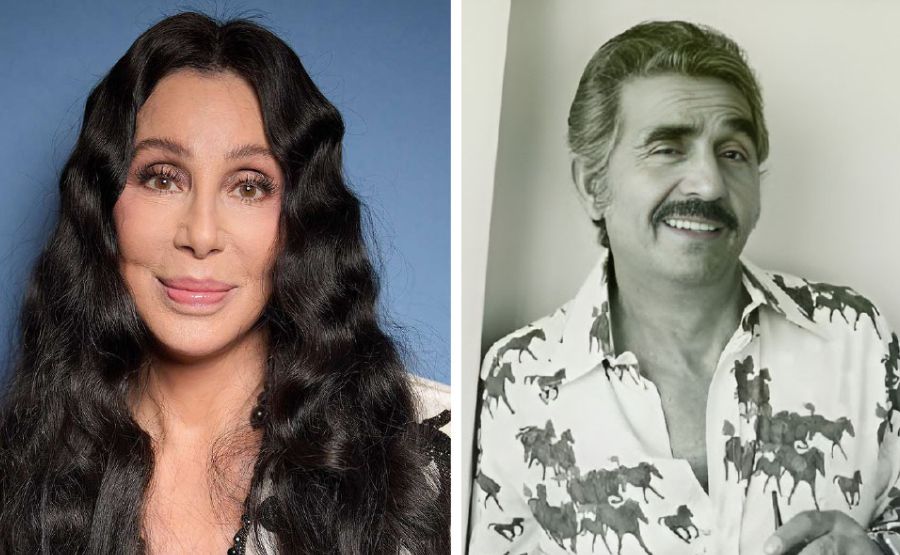

Most fathers brag about their famous kids. He was sued by John Paul Sarkisian.
In 1975, while his daughter Cher was at the peak of her career — recording hits, filling arenas, becoming genuinely untouchable in American pop culture — her biological father filed a $4 million defamation lawsuit against her. Against her. He sued Time and People magazines too, because Cher had told them something pretty straightforward: that he was a heroin addict and a compulsive gambler.
He wasn’t wrong that she said it. She absolutely said it. Because it was true.
That one moment tells you almost everything about John Paul Sarkisian. A man who spent decades absent from his daughter’s life, showed up when she was already globally famous, couldn’t hold the relationship together for more than six months, and then responded to her honesty about his demons by filing legal papers.
This is that story. The full one.
Quick Bio
| Detail | Info |
| Full Name | John Paul Sarkisian |
| Born | March 23, 1926 — Oakland/Berkeley, California, USA |
| Died | January 28, 1985 — Fresno, California, USA |
| Age at Death | 58 years old |
| Ethnicity | Armenian-American |
| Parents | Immigrants from Armenia, Ghiragos “George” Sarkisian and Siranousch “Blanche” Dilkian |
| Siblings | Lucy Sarkisian Mirgian, Roxanne Sarkisian Hopkins (full); several half-siblings |
| Marriages | Georgia Holt (1946, divorced 1947; remarried 1965, divorced 1966) |
| Children | Cher (Cherilyn Sarkisian); reportedly also a son, George Sarkisian |
| Jobs Held | Truck driver, bartender, auto mechanic, hairstylist, horse breeder, nightclub owner |
| Legal Issues | Arrests for drug possession, fraud, bad checks; filed $4M lawsuit against Cher (1975) |
| Buried | Fresno Memorial Gardens, Fresno, California |
| Cause of Death | Officially undisclosed; reported by some sources as a heart attack |
Start Here — The Armenian Genocide Is Where This All Begins
John Paul Sarkisian had drug issues before becoming a truck driver. Before the lawsuit. Before the absent father years. There was something much bigger in the background.
His parents were Armenian immigrants. George Sarkisian and Siranousch Dilkian had survived the Armenian Genocide — one of the most catastrophic events of the 20th century — and made it to America. They settled in California and built a life from scratch, the way refugees do. Quiet dignity. Hard work. Community.
John Paul was born into that family in 1926, three years before the Great Depression hit. So his entire childhood was shaped by two forces at once: the weight of generational trauma from genocide, and the grinding economic collapse of Depression-era America. That’s not a small thing. That’s the kind of foundation that either builds people into something resilient — or cracks them underneath the pressure.
His maternal great-grandparents arrived in New York in 1912 on a ship called the S.S. Alice, fleeing Turkey via Greece. They eventually landed in Fresno, California — a city with a significant Armenian population. Both sides of the family had strong ties to Fresno. That city would eventually be where John Paul died, decades later.
He was the youngest of five children. He went to technical school in Fresno. He was drafted in World War II. Nothing about his early life screamed trouble. It was a standard working-class immigrant family story.
Then the adult years happened.
See also “Bill Melugin Wife Doesn’t Exist — And The Internet Can’t Handle That“
The Jobs. All of them. Because There Were A Lot.
Let’s talk about John Paul’s work history because it’s actually a window into the man.
He tried everything. Truck driving was the constant — the thing he always came back to, the job he’d identify as his. But the full list is something else entirely. Truck driver. Bartender. Auto mechanic. Hairstylist. Nightclub owner. Horse breeder. Seasonal produce delivery. He even had a brief attempt at running his own trucking company when his father stepped in and bought him five whole trucks to get started.
Five trucks. His dad gave him a fleet. A real shot.
It collapsed. The business didn’t survive. And that pattern — real opportunity, promising start, eventual collapse — played out repeatedly across John Paul’s life. Not because he lacked charm or intelligence. By all accounts he had both. Cher herself described him as charming. But charm without stability is just a better way to disappoint people.
He ended his working years at Somerset Farms in Santa Ynez as a horse breeder. That’s genuinely where the obituary found him — at a ranch, breeding horses, quiet and private, roughly three years before he moved back to Fresno and died. It’s not the dramatic ending you’d expect. It’s almost peaceful. Almost.
Georgia Holt, The Marriage, and the Fast Math
Here’s where Cher enters the picture. And the math here is interesting.
John Paul met Jackie Jean Crouch — a woman who’d later rename herself Georgia Holt — sometime in the mid-1940s. She was from Kensett, Arkansas. Had worked in a donut shop as a teenager. Was trying to build something in California. They married in 1946. Cher was born May 20, 1946. They divorced in 1947.
So that marriage lasted about a year. Maybe less. Cher was maybe ten months old when her parents split.
John Paul’s instability — the mood swings, the gambling, the early signs of the addiction that would define his adult years — made the marriage impossible to sustain. Georgia was left to raise Cher largely on her own. Things got bad enough at points that Cher briefly ended up in an orphanage because her mother couldn’t financially manage alone. Not because anyone was cruel. Just because poverty is genuinely that brutal sometimes.
Georgia Holt moved forward. She remarried several times. One of her later husbands, Gilbert LaPiere, actually legally adopted Cher and her half-sister Georganne, changing their last names. That’s who raised Cher in a practical sense — not John Paul, not even Georgia alone, but a patchwork of circumstances and a mother who kept trying.
Here’s the part nobody talks about much: John Paul and Georgia tried again in 1965. Nearly two decades after the first divorce. They remarried. Maybe they both thought something had changed. Maybe the nostalgia of shared history was strong enough to paper over reality. It lasted one year. They divorced again in 1966. Same problems. Same man.
Eleven Years Old. The First Meeting.
Cher was eleven when she met her father for the first time.
Think about that. I am eleven years old. No contact before that. Her mother eventually asked if she wanted to meet him, and Cher said yes. Whatever she’d imagined about him — whatever picture a kid builds in their head about the absent parent — met the actual reality.
And he was charming. That part she confirmed. He was good-looking. There was a physical resemblance she immediately noticed. For a brief window, there was something there.
Six months, roughly, is how long that period of connection lasted. Then Cher saw clearly what she was dealing with. The heroine. The gambling debts. The behavior that was unpredictable in the worst ways. The larceny — her word for a certain quality he had, that easy dishonesty dressed up as personality. She walked away.
She didn’t just quietly distance herself either. She spoke about it. Directly and publicly. She told reporters what she saw in him. She named his addictions. She described the pain. This is where the 1975 lawsuit becomes so revealing.
The Lawsuit. The Audacity of It.
John Paul Sarkisian sued his daughter Cher, Time magazine, and People magazine for $4 million dollars in 1975.
His claim? That Cher’s statements — publicly describing him as a heroin addict and compulsive gambler — had damaged his reputation.
Here’s what he acknowledged in the same legal proceedings: he had in fact been arrested. He had in fact had legal troubles involving narcotics. He had in fact written bad checks. He said he’d changed. He said he was living differently now. Maybe he believed that.
But suing your estranged daughter for telling the truth about your addictions isn’t a move that reads as change. It reads as the same pattern — shifting responsibility outward, looking for someone else to blame for the consequences of your own behavior. The case was eventually dismissed.
Cher reportedly vowed after that lawsuit to never contact him again. Given the timeline — he died ten years later, in 1985 — it appears she kept that vow. She didn’t attend his funeral. Not a detail people dwell on, but significant. She was alive, she was famous, she had the means to be there. She chose not to.
That choice says more than any interview quote could.
The Prison Years and the Addiction Nobody Could Fix
Let’s be direct about this part too. John Paul Sarkisian went to prison. He was arrested on drug charges. He was arrested for fraud. Writing bad checks was documented. The addiction to heroin wasn’t a rumor Cher invented — it was a documented reality that showed up in court records.
Addiction in mid-20th century America wasn’t treated the way it’s understood now. There was no recovery infrastructure, no serious medical framework for heroin dependency, minimal compassion in the legal system. Men like John Paul Sarkisian were criminalized, jailed, and cycled back into the same environments that fed the problem.
Does that excuse the behavior? No. Does it explain some of it? Honestly, yes. Compulsive gambling alongside heroin is a pairing that appears together constantly in addiction research — dopamine-chasing behaviors that reinforce each other. His father had given him real capital to build something. He couldn’t keep it together long enough.
It’s worth saying plainly: John Paul wasn’t purely a monster and he wasn’t purely a victim. He was a man with serious untreated addiction who made choices that kept costing the people around him — especially the daughter he never gave himself the chance to know.
The Armenian Legacy That Outlived Him
Here’s something that almost doesn’t get said enough. John Paul Sarkisian’s most lasting contribution to the world isn’t the lawsuit or the divorces or the failed trucking company. It’s the heritage.
His parents survived genocide. They crossed oceans with nothing and built a community in Fresno, California. Through disaster, they carried their identity, culture, language, and faith. That lineage ran directly into Cher.
Cher has spoken about her Armenian roots throughout her career. She knows where they come from. She knows they come from John Paul’s side. And despite the entirely broken relationship between them — the decades of absence, the six-month reunion that collapsed, the lawsuit, the estrangement that lasted until his death — she has consistently expressed pride in that heritage.
That’s a remarkable thing actually. To take something from a parent who hurt you and still find value in it. Still claim it. Still carry it.
The genocide survivors who became John Paul’s parents probably never imagined that their great-granddaughter would sell 100 million records. Life moves in strange directions.
The End — Fresno, Horses, Quiet
John Paul Sarkisian’s final chapter is almost eerily calm compared to everything before it.
He ended up at Somerset Farms in Santa Ynez working as a horse breeder. Somewhere along the way he moved from there back to Fresno — the city his family had been connected to for generations. He died January 28, 1985. He was 58. No major headline. No media coverage to speak of. The Santa Cruz Sentinel ran a brief notice. That was about it.
The public was never formally informed of the reason of death. Some sources report a heart attack. Whatever the specific cause, fifty-eight years of hard living — addiction, legal trouble, financial instability, broken relationships — had taken a visible toll.
He was buried at Fresno Memorial Gardens. The close family only knew about his passing. Cher did not attend the funeral.
No reconciliation. No deathbed moment. No dramatic forgiveness scene. Just a man dying quietly in a city that held his roots, with the most famous daughter in the world not in the room.
Final Thoughts
The truth about John Paul Sarkisian can be found here.
He’s not a villain. He’s not a footnote. He’s something more complicated and more human than either of those things.
He was a man shaped by genocide, depression-era poverty, working-class instability, and addiction that his era had no real tools to address. He had charm and charisma that everyone confirmed. He also made choices — repeatedly, stubbornly — that hurt the people closest to him. His daughter got maybe six months of knowing him before she saw clearly what she was dealing with.
And then he sued her for saying it out loud.
Fame culture does something weird with stories like this. It reduces them to either tabloid fodder (the junkie who sued his own child) or sorrow porn (the depressed father of a legend). The reality is messier and more interesting. A man who carried the DNA of genocide survivors and Depression survivors but couldn’t survive himself. Who passed an entire cultural identity to a daughter he barely knew. Who died at 58 while she was touring the world.
Cher became who she became partly because of his absence. Independence. The refusal to need anyone. The bulldozing ambition that doesn’t wait for permission. Those traits were forged in part by what he didn’t provide.
He taught her what she didn’t want her life to look like. That’s a hard lesson. It was the most valuable thing he gave her, even if he never meant to give it at all.
FAQs
1. Who was John Paul Sarkisian?
He was Cher’s biological father — an Armenian-American man born in Oakland, California in 1926. He worked mostly blue-collar jobs, battled heroin and gambling addiction throughout his adult life, and died in Fresno, California in 1985 at age 58. He was never a public figure himself; his name exists in the cultural record entirely because of his daughter.
2. What was the occupation of John Paul Sarkisian?
An impressive range, none of it stable. Truck driver was his main identity and the job he returned to most often. But he also worked as a bartender, auto mechanic, hairstylist, nightclub owner, produce delivery driver, and horse breeder. His father once bought him five trucks to launch his own trucking business. It failed. He ended his working years breeding horses at Somerset Farms in Santa Ynez.
3. For what reason did John Paul Sarkisian file a lawsuit against Cher?
In 1975, he filed a $4 million defamation lawsuit against Cher, Time magazine, and People magazine. The basis was that Cher had told journalists he was a heroin addict and compulsive gambler — descriptions that, by his own admission in court, weren’t entirely inaccurate. He argued the statements damaged his reputation. The case was dismissed. The lawsuit effectively ended any remaining possibility of a father-daughter relationship.
4. When did Cher first meet her father?
At age eleven. Her parents had divorced when she was approximately ten months old, so she had zero memory of him from early childhood. Her mother eventually offered her the choice of meeting him. Cher said yes. What followed was about six months of sporadic contact before she walked away permanently.
5. Did Cher attend John Paul Sarkisian’s funeral?
No. She did not attend his funeral in January 1985. Given that she had publicly vowed to end contact after the 1975 lawsuit, the absence wasn’t surprising to anyone who’d been following the family history. It was a final, quiet marker of how completely their relationship had broken down.
6. What was John Paul Sarkisian’s ethnicity?
Fully Armenian-American. Both his parents, George Sarkisian and Blanche Dilkian, were Armenian immigrants who had fled the Armenian Genocide and settled in California. His family had deep ties to Fresno, which had a significant Armenian community. This heritage passed directly to Cher, who has spoken about it throughout her career.
7. How many times did John Paul Sarkisian marry Georgia Holt?
Twice. First in 1946 — the marriage that produced Cher — which ended in divorce in 1947. Then they attempted reconciliation and remarried in 1965. That second attempt lasted less than a year, ending in divorce again in 1966. Georgia Holt went on to have other marriages and a career of her own as a singer, songwriter, and actress. She passed away in 2022.
8. Did John Paul Sarkisian go to prison?
Yes. He was arrested and served time for drug-related offenses and fraud. He admitted in the context of the 1975 case that he had earlier arrests and legal issues including drugs and writing bad checks, albeit the specifics of his legal history were not fully documented in public sources.
9. How did John Paul Sarkisian die?
He died January 28, 1985, in Fresno, California. He was 58. The official reason of death was never made public. Some sources report a heart attack. He had spent his final years as a horse breeder in Santa Ynez before relocating back to Fresno approximately three years before his death. He was buried at Fresno Memorial Gardens.
10. Did John Paul Sarkisian have any children besides Cher?
At least one other child is documented — a son named George Sarkisian, who lived entirely out of the public eye. Little is verified about George’s life or relationship with either his father or his half-sister Cher.
11. How did John Paul Sarkisian influence Cher’s career?
Largely through absence. Cher’s independence, her refusal to be told what to do, her drive to control her own image and narrative — these traits were shaped partly by growing up without a father and with a mother who struggled financially. He also gave her Armenian heritage, which she has claimed and expressed pride in throughout her entire career, despite their broken relationship.
12. Was the $4 million lawsuit successful?
No. The case was dismissed. John Paul did not receive any settlement or damages from Cher or the publications. The lawsuit did, however, achieve something unintended: it permanently cemented the estrangement between father and daughter and gave the press a very public window into exactly how fractured the Sarkisian family had become.
Keep discovering, connecting, and thriving with The Nexus Magazine every day.